Wedding Rentals in Canada: What to Rent, What to Skip, and How Rental Pricing Works
October 30, 2026
Chairs, linens, tableware, arches and tents can quietly save your Canadian wedding budget, or quietly blow it up once delivery fees and damage waivers land. A practical guide to renting for a Canadian wedding.
Wedding Rentals in Canada: What to Rent, What to Skip, and How Rental Pricing Works
Renting is one of the quietest ways Canadian couples stretch a wedding budget. Chairs, tables, linens, arches, lighting and tableware rarely need to be owned, yet buying them new can cost several times what a week-long rental does. At the same time, the rental industry in Canada has its own rules: delivery zones, weekend minimums, damage waivers and setup windows that surprise first-time couples. This guide walks through what is worth renting, what is usually not, and how to read a rental quote so nothing on your invoice is a surprise.
Why Rentals Make So Much Sense for Canadian Weddings
Canada's wedding season is compressed. Most ceremonies happen between late May and early October, which means rental companies pack a year of demand into about twenty weekends. The upside for couples is a mature, competitive rental market in every province, from large event rental warehouses in the GTA and Metro Vancouver to small family operations serving single regions. The downside is that summer Saturdays book out months ahead, especially for tents and specialty items.
Renting also solves the geography problem. A couple marrying in Picton, Canmore, or the Laurentians usually cannot drive a vanload of chiavari chairs and a dance floor themselves. Rental companies exist precisely to move, set up, and retrieve that equipment, and their delivery routes are often the only practical way to get a curated look into a barn, vineyard, or family backyard.
What Couples Most Often Rent
Tables, Chairs and Linens
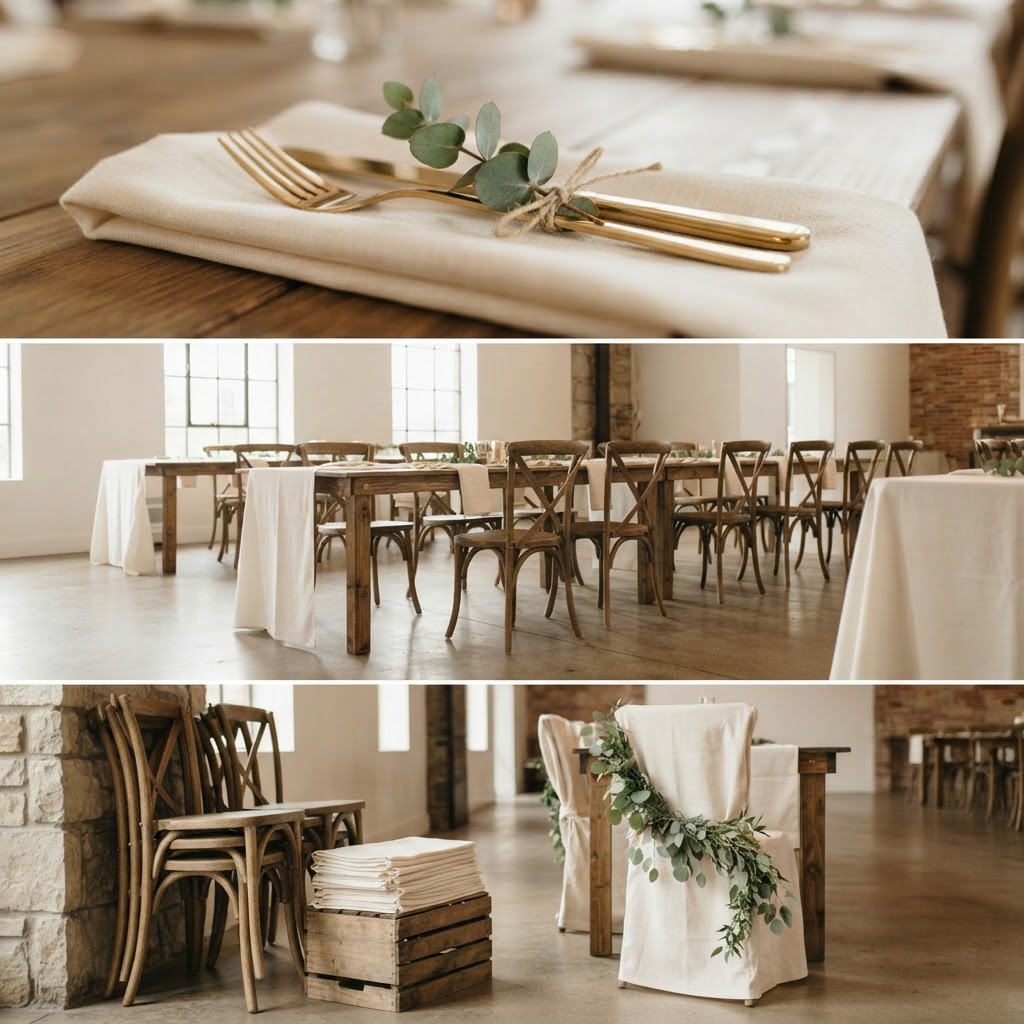
These are the backbone of almost every rental order. Even venues that provide tables and chairs often provide only basic banquet rounds or rectangular folding tables, so couples who want a particular look, such as farm tables, cross-back chairs, or ghost chairs, rent to fill the gap. Linens follow the same logic: venue house linens are usually plain, and renting fitted tablecloths, table runners, and cloth napkins in your palette is far cheaper than buying fabric you will never use again.
When your venue already supplies acceptable tables and chairs, compare the rental cost against the upgrade value honestly. Seat covers or sashes can be a mid-priced compromise, but many planners now simply skip them in favour of better chairs from a rental house, which photographs more cleanly.
Ceremony Backdrops and Arches
Arches, chuppahs, arbours, and free-standing floral frames are among the most frequently rented items in the country, and with good reason. They are used for one hour of one day, they are awkward to store or transport, and rental versions are built to be assembled quickly by people who do it every weekend. If your venue has a permanent installation or a striking natural backdrop, such as a lake, escarpment, or orchard row, you may be able to skip this line entirely and save for something guests will actually notice, like lighting.
Dinnerware, Glassware and Flatware
Renting place settings is standard practice, and most rental companies price them per piece with volume discounts. The practical question is who handles them on the day. Some caterers include tableware in their service; many do not, and assume rentals will arrive packed and ready. Coordinate early: if your caterer is supplying service staff, rented tableware needs a clear plan for bussing, repacking, and rinse requirements, because companies generally expect dishware returned scraped but not necessarily washed, and specifics vary by contract.
Lounge Furniture and Specialty Pieces
Velvet sofas, barrel chairs, coffee tables, rugs and lanterns can transform a cocktail space, but they are among the most expensive rentals per square metre. Rent one anchor piece, such as a sweetheart lounge for two, rather than a full living-room vignette. The same discipline applies to dance floors, tent sidewalls, market lights, and patio heaters: rent them when the venue genuinely lacks them, not to duplicate what the site already has.
Tents and Weather Gear
If any part of your celebration is outdoors without shelter, tents are non-negotiable, and they require the longest lead time. Tent rentals usually include an installation crew, anchoring, and sometimes city fire-compliance paperwork, and quotes vary with size, flooring, sidewalls, lighting, and whether the site is grass, patio, or uneven ground. Reserve early: in most provinces, quality tent companies are fully committed for peak Saturdays by early spring.
What Is Usually Not Worth Renting
Some items are cheaper to buy, personalize, or delegate elsewhere. Skip these rental lines when you can:
- Candles and candle holders. Bulk pillar candles from big-box and dollar stores cost less than rental candleware, and you can gift or donate leftovers.
- Small decor accents. Signs, baskets, card boxes, and cushions are easy to buy, borrow from recently married friends, or find in bridal resale groups, which are active across every Canadian city.
- Items your venue includes. Request the venue's full inventory list before signing a rental contract. Venues often own staging, easels, coat racks, space heaters, and even linens that couples double-book by mistake.
- Anything requiring a full second delivery. Consolidating every rental with one company in one delivery window almost always beats splitting an order to chase small savings.
How a Canadian Rental Quote Actually Works
Rental quotes have a structure that surprises first-timers. Beyond the per-item line prices, expect some combination of the following, and ask for each explicitly if it does not appear:
- Subtotal for items, quoted per piece and per day, though "day" is usually defined as the weekend.
- Delivery and pickup fees, priced by distance or zone. Rural and cottage-country deliveries can carry notable surcharges or set delivery windows, such as Friday afternoon drop and Sunday morning pickup.
- Setup and teardown labour, which may be included, billed hourly, or unavailable for small orders.
- Damage waiver or insurance, often a percentage of the subtotal. It reduces your liability for ordinary breakage; read what it excludes, because it almost never covers theft, loss, or negligence.
- Security deposit, refundable after the return inspection.
- Taxes and any environmental or fuel surcharges.
When comparing two companies, compare the fully landed total, not per-chair prices. A lower per-item rate with a stiff delivery fee loses to a slightly pricier local company that includes setup.
Questions to Ask Before You Sign
- When exactly will items arrive, and who on site receives them?
- What are the return conditions, including how tableware should be scraped, packed, or stacked?
- Is the damage waiver optional, and what does it leave you responsible for?
- What happens if an item breaks, weathers, or is short-shipped on arrival?
- What is the backup plan if a truck or installation crew runs late on a peak Saturday?
Coordinate Rentals With Venue and Caterer, Not Around Them
The most expensive rental mistakes come from booking in isolation. Before you order, confirm three things with your venue: when vendors may load in and out, where the delivery truck can park, and whether the venue requires proof of insurance from every supplier. Confirm two more with your caterer: whether they handle rented tableware on the table, and what reset or bussing they expect. Then give your rental company exact times, a site contact, and access details in writing. A delivery that arrives when nobody is on site can turn into redelivery fees or, worse, a morning-of scramble.
For backyard weddings, add a site visit by the rental company when possible, especially for tents and dance floors, since grading, septic fields, sprinkler lines, and overhead wires all affect installation.
The Short Version
Rent the big, structural items: tables, chairs, linens, tableware, and a tent if you are outdoors. Buy or borrow the small stuff. Compare quotes on the fully landed total including delivery, setup, waiver and taxes. Book tents and specialty seating early for a summer Saturday, lock your delivery window in writing, and confirm load-in rules with your venue before you sign. Handled this way, the rental line in your budget buys you exactly the wedding you pictured, without paying full price for chairs you would use once.
Actionable takeaway: this week, request the complete inventory list from your venue and the service inclusions from your caterer. Every overlap you find is a rental line you can delete.