Winter Weddings in Canada: What They Actually Cost, Where to Hold Them, and the Details Nobody Warns You About
November 6, 2026
Winter is not a cheaper version of summer. It is a different product with a different cost structure, and some of what you save reappears as a line item nobody budgeted for...
Winter Weddings in Canada: What They Actually Cost, Where to Hold Them, and the Details Nobody Warns You About
Most Canadian couples plan for June without ever pricing January. That is a mistake worth correcting early, because a winter wedding is not a compromised summer wedding. It is a different product with a different cost structure, different risks, and a genuinely different feel. Some of what you save is real. Some of what you save reappears as a line item you did not budget for. Here is the honest version.
Why winter pricing is genuinely lower
Vendors in Canada price against demand, and demand collapses between November and March. Venues that charge a peak-season Saturday rate will quote a materially lower number for a Friday or Sunday in January, and many will include things that cost extra in July, such as an extended setup window or a ceremony space you would otherwise rent separately. Photographers, florists, DJs and planners are all working a thinner calendar in those months, which gives you negotiating room that simply does not exist in August.
The catch is that "cheaper" is not automatic. A venue with a heated outdoor structure, a fireplace room, or a dedicated winter package may hold its rate because it has built a product people will pay for. Ask directly what the off-season rate is, what it includes, and what it excludes, then compare the totals rather than the headline venue fee. A January venue fee that looks modest can carry a mandatory staffing charge, a coat check surcharge, and a higher food and beverage minimum.
The real cost differences, line by line
Venue. Expect the largest single difference here. Off-season dates are where the discount lives, especially in the first two weeks of January and the first two weeks of March. Weekday and Sunday dates in February are usually the softest of all.
Catering. Food cost does not change with the season, but your minimum spend might, because venues are more willing to negotiate when the room would otherwise sit empty. Winter menus also lean on braises, roasts and root vegetables, which are often cheaper per plate than summer produce.
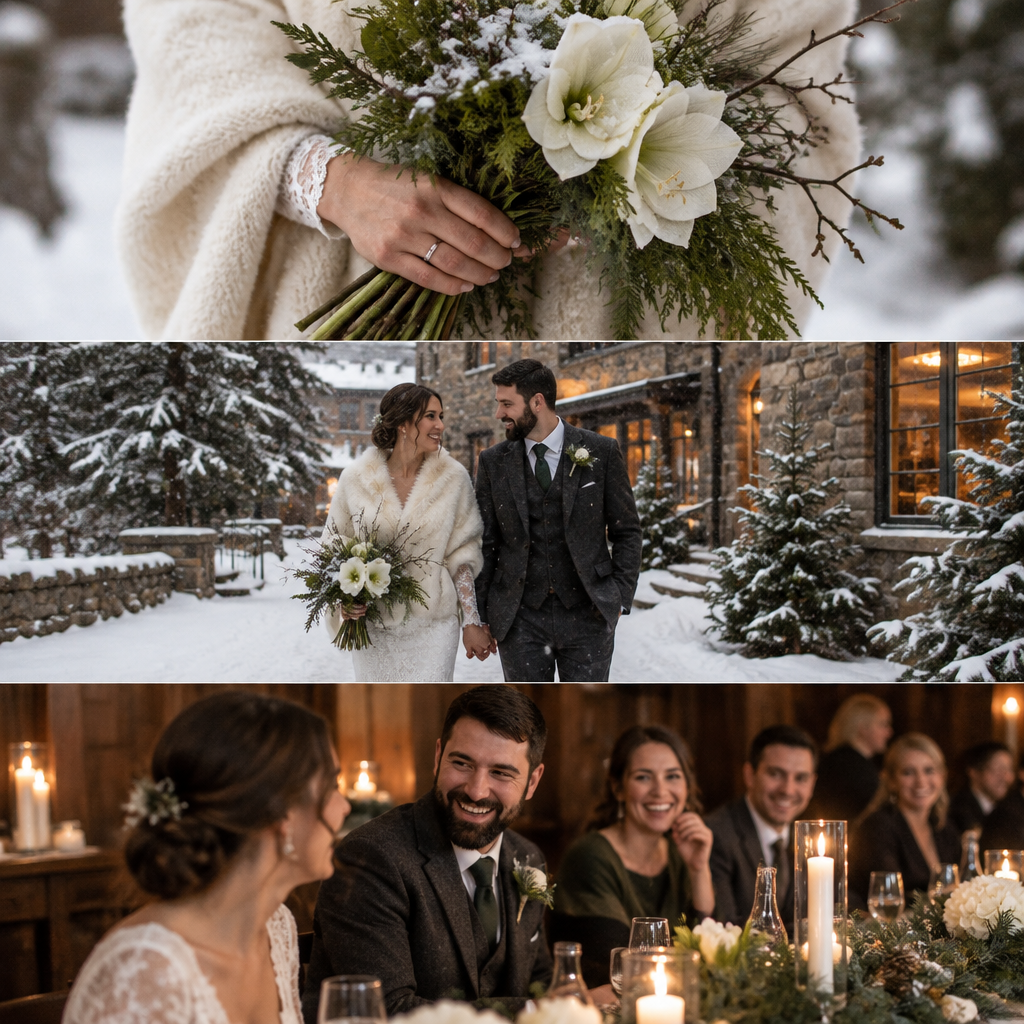
Flowers. This is where winter can genuinely win. Imported summer blooms in February are expensive and fragile in transit, but seasonal winter material such as amaryllis, evergreen, branches, tulips and ranunculus holds beautifully in the cold and costs less. Ask your florist to design seasonally rather than recreating a summer palette in January.
Photography. Rates hold fairly steady, but winter gives a photographer more time. Golden hour arrives in the middle of the afternoon, so you are not racing sunset at 9pm, and a photographer who would book two weddings in a July weekend is often free to give you a longer day. That is real value at the same price.
Attire and beauty. Winter requires different choices rather than necessarily more money. A wrap, a long-sleeve overlay or a second look for outdoor photos is an added cost. Hair and makeup that has to survive cold air, wind and then a warm room needs a trial in similar conditions, which is a small extra booking but avoids a very expensive regret.
Transportation. This is the line item couples forget. Winter requires either a vehicle large enough to move your party without anyone standing outside, or a plan for guests arriving in a snowstorm. Shuttle costs can rise, and a limo company may add a weather clause. Ask what happens if a road closes.
Insurance. Wedding insurance is inexpensive relative to the rest of the budget and materially more valuable for a winter date. Confirm that your policy responds to weather-related cancellation and supplier failure, and read the exclusions rather than the summary.
Where to hold a winter wedding in Canada
The best winter venues share three features: a covered arrival point so nobody walks through slush in formal wear, a controlled transition between ceremony and reception, and a room that photographs well when it is dark outside by five o'clock.
Consider these categories rather than specific names, since availability changes constantly:
Hotels and historic inns. The strongest winter option for most couples. Guests stay on site, the coat situation is managed, and a snowed-in evening becomes part of the experience rather than a crisis.
Conservatories and greenhouses. Warm, green and full of light when the outdoor world is grey. Book early, because this is the most requested winter venue type in Ontario and BC.
Ski resorts and lodges. Built for the season, with infrastructure for cold-weather arrivals and often a genuine off-season discount on accommodation blocks for guests.
Restaurants and private dining rooms. Excellent for weddings under about 80 guests. You inherit an existing kitchen, décor and heating, which removes several budget lines at once.
Barns and tented venues. Approach with caution between December and March. Ask how the space is heated, what the backup plan is if the heat fails, and whether washrooms are indoors. A beautiful venue that is 14 degrees at dinner is not a bargain at any price.
The details nobody warns you about
Daylight is your schedule. In December and January, usable outdoor light in most of Canada ends around 4:30pm. If you want outdoor portraits, they happen before the ceremony or immediately after, not during cocktail hour. Build the timeline around the light, not around tradition.
Cold changes how people behave. Guests arrive in coats, boots and hats, which means you need real coat storage, not a rack by the door. Outdoor photos need a warm place within 60 seconds of the camera, especially for children and older guests.
Vendors travel differently. A florist delivering at 8am after an overnight snowfall is dealing with roads, not just traffic. Build buffer into delivery windows and confirm your contract states who bears the cost of a weather-related delay.
Your dress and shoes are a practical decision. Satin and long trains collect salt and slush. Many winter brides choose a second, shorter look for arrival and photos, or keep the ceremony look indoors until the aisle.
Guest attendance drops, and that is fine. Winter weddings often see a higher decline rate for out-of-town guests. Build your headcount conservatively and confirm final numbers close to the deadline. A slightly smaller room at a better rate is an advantage, not a failure.
Vendors you love are available. The single biggest winter advantage is access. Photographers, planners and venues that are booked solid 18 months out for a July date will often hold a February date with a normal lead time.
What winter weddings are actually good at
Low light, candlelight and evergreen are a design language that summer cannot reproduce. Rooms feel warmer and more intimate. Guests stay rather than drift between outdoor spaces. Your photographs have a mood that does not look like every other wedding on the internet. And the money you save on the venue can be moved into the parts of the day your guests will actually remember: food, drink, music and photography.
That last point is worth repeating. Winter is not a way to have a cheaper wedding. It is a way to have a better wedding for the same money, or the same wedding for less, and the choice between those two is entirely yours.
One practical note before you book
Michael Francis Zeiss Photography & Cinematography (www.michaelzeiss.ca) is running a 50% winter special for weddings taking place in 2026, 2027, 2028 or 2029. The offer expires December 31, 2027. If photography and film are on your must-have list, half price is worth a conversation before you commit elsewhere.
Your takeaway
Price a winter date before you assume it is out of reach. Get the venue's real off-season total including staffing and minimums, ask your florist to design with what is actually in season, build your timeline around a 4:30pm sunset, and move the savings into photography, food and music. Then confirm your insurance covers weather. Do those four things and a February wedding will cost less and photograph better than the June date you were about to book.


