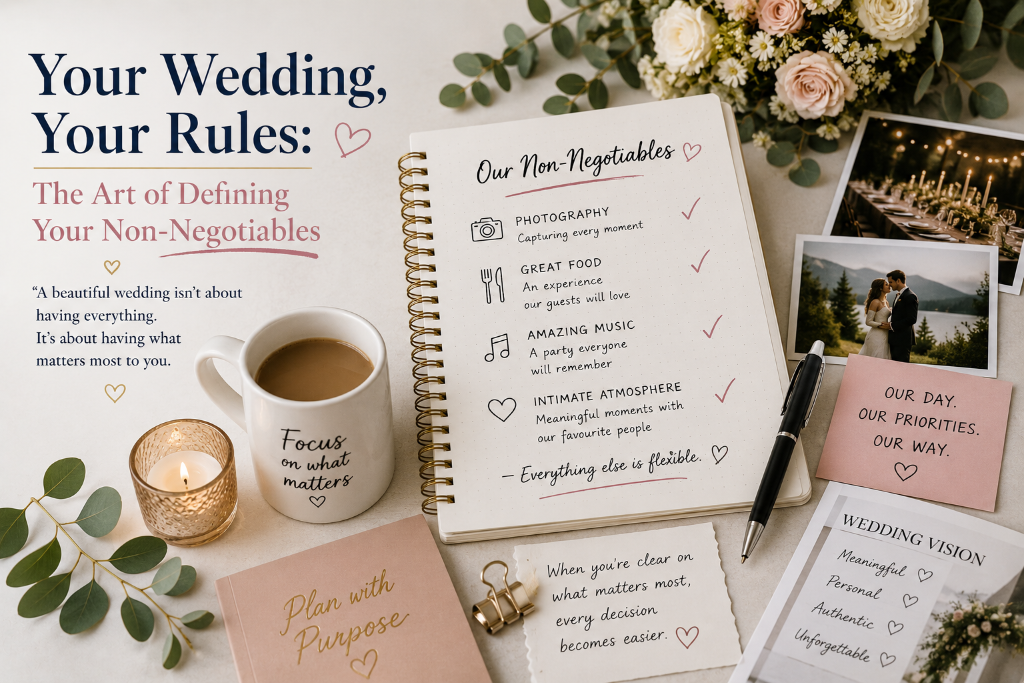
Your Wedding, Your Rules: The Art of Defining Your Non-Negotiables
July 13, 2026
Break free from the wedding 'shoulds' and learn how to identify what truly matters—so you can invest in your priorities and cut everything else.
Your Wedding, Your Rules — The Art of Defining Your Non-Negotiables
Estimated reading time: 20 minutes
Breaking Free from the 'Should' Trap
"I'm supposed to have a champagne toast, right?"
"I should probably do favours — everyone does favours."
"Isn't a large wedding party just what you do?"
If you've asked yourself any of these questions, you've fallen victim to the wedding "shoulds." These are the traditions, expectations, and norms that couples feel obligated to follow, even when they don't align with their values or budget.
Here's a liberating truth: your wedding doesn't have to look like anyone else's. Not your cousin's lavish ballroom affair. Not the influencer's Instagram-perfect celebration. Not the Pinterest board that's been saved by thousands.
Your wedding should reflect you and your partner — your love story, your values, your priorities. Everything else is optional.
The Non-Negotiables Exercise
The "Wine and Non-Negotiables Exercise" is a practical way to identify what truly matters:
- Pour two glasses of wine (or your beverage of choice)
- Get paper and pens
- Write down the top five things each of you want for this wedding — be specific (e.g., "a live band," "amazing food," "a videographer")
- Share your lists and discuss
- Identify what's completely non-negotiable for each person
These non-negotiables are where you should invest your budget. Start here and then see how much these shared priorities will cost by reaching out to your three favourite businesses in each category.
What Wedding Planners Want You to Stop Spending On
Industry professionals — who could profit from bigger budgets — are increasingly vocal about what couples should cut. Here are some of their top recommendations:
Large Wedding Parties
"The bigger the party, the bigger the price tag. More people means more logistics from glam, flowers, food while they're getting ready, gifts, transportation," says wedding planner Jove Meyer.
Jolene Peterson adds: "Trimming (or cutting) your wedding party will save you more than just money — it can make your entire planning process smoother, less stressful, and more enjoyable."
Wedding Favours
"Favours can feel like a 'must-have,' but if they're not something meaningful, they can just end up being stuff guests don't really need or want," says Meyer. "Instead of spending on favours that'll likely get left behind, invest in an experience that guests will enjoy during the wedding."
Welcome Bags
"Most luxury resorts now offer some sort of water refill or reusable water stations, so filling guest rooms with plastic water bottles feels wasteful and unnecessary," says Peterson. "If you really want to welcome guests in a meaningful way, consider leaving a personalised note, a hotel amenity, or one practical gift instead."
Cocktail Hour Overload
"It is honestly the biggest waste of money," says wedding planner Michelle Norwood of cocktail hours. "This is not the place to drop $25k-plus on entertainment."
Champagne Toasts
"A little bubbly always makes things more festive, but pouring Champagne for every single guest feels silly and unnecessary," says Peterson. "High-quality Champagne gets pricey and caterers will be charging you for every guest who gets a pour, regardless of whether they drink it or not."
Signature Cocktails
"Signature cocktails can be a fun way to add a personal touch… but they often end up costing thousands in extra bar costs due to unique ingredients, extra labour, and added product."
What Actually Matters
If not favours, welcome bags, or large wedding parties, what should you invest in?
The Guest Experience
What guests will truly remember isn't the calligraphy on the invitations or the monogrammed napkins. They'll remember:
- How they felt (welcomed, comfortable, included)
- The food and drinks
- The music and atmosphere
- The opportunity to connect with you and other guests
Your Experience
You'll remember this day for the rest of your life. What will make you feel present, joyful, and fully engaged?
- A photographer who captures the moments that matter
- A wedding planner who handles logistics so you can relax
- A venue that feels right
- Food that you actually enjoy
Creating Your Wedding Vision
Your non-negotiables form the foundation of your wedding vision. Here's how to build from there:
1. Start with feeling
How do you want to feel on your wedding day? Joyful? Relaxed? Celebrated? Intimate? The feeling should drive the decisions.
2. Consider your guests
What kind of experience do you want to create for your guests? Will they leave feeling connected, entertained, well-fed, and appreciated?
3. Think about the season and setting
Your wedding should make sense for the time and place. A formal sit-down dinner in a rustic barn might feel forced; a family-style meal with sharing plates could be perfect.
4. Be true to yourselves
If you're not a formal couple, don't plan a formal wedding. If you love nature, get married outdoors. If you're foodies, invest in an amazing menu.
Practical Examples
Here are some real-life examples of couples who defined their non-negotiables and built their wedding around them:
Example 1: The Foodies
- Non-negotiables: Amazing food, quality wine, intimate setting
- Budget allocation: 60% to food and wine, 20% to photography, 10% to venue, 10% to everything else
- Savings: Small wedding party, no favours, DIY flowers, Spotify playlist instead of DJ
Example 2: The Party Animals
- Non-negotiables: Live band, open bar, large guest list
- Budget allocation: 50% to venue and catering, 20% to entertainment, 15% to bar, 15% to everything else
- Savings: No videographer, simple flowers, buffet instead of plated dinner
Example 3: The Romantics
- Non-negotiables: Intimate ceremony, beautiful photography, memorable venue
- Budget allocation: 40% to photography, 30% to venue, 20% to catering, 10% to everything else
- Savings: Small guest list (under 50), day-of coordinator instead of full planner, simple decor
Resisting Comparison Culture
The most important skill in wedding planning isn't negotiating or budgeting — it's the ability to resist the pressure to compare.
"FOMO is a very real part of wedding planning but just try to remember what's most important to you both so that you don't feel yourself getting swept up in someone else's vision."
Social media is filled with highly curated images that create unrealistic expectations. The more you scroll, the more you might feel like your wedding isn't enough.
Strategies for resisting comparison:
- Limit your exposure: Take breaks from social media platforms that make you feel pressured or inadequate
- Focus on your non-negotiables: Revisit your list when you feel yourself getting swept away
- Practice gratitude: Remind yourself of what you have, rather than focusing on what you don't
- Remember your why: This is about your marriage, not your wedding
The Final Word
Your wedding should be a reflection of you. Not a checklist of what you're supposed to do. Not an attempt to keep up with anyone else.
"Your wedding should reflect what matters most to you and your partner. It's about celebrating your love and the things you hold dear. If something isn't truly important, don't waste money on it."
Define your non-negotiables. Spend there. Cut everywhere else. And resist the pressure to be anyone other than who you are.
Your wedding, your rules. That's the only way to do it.