The Wedding Budget Trap: How to Have a Beautiful Wedding Without Starting Your Marriage in Debt
July 10, 2026
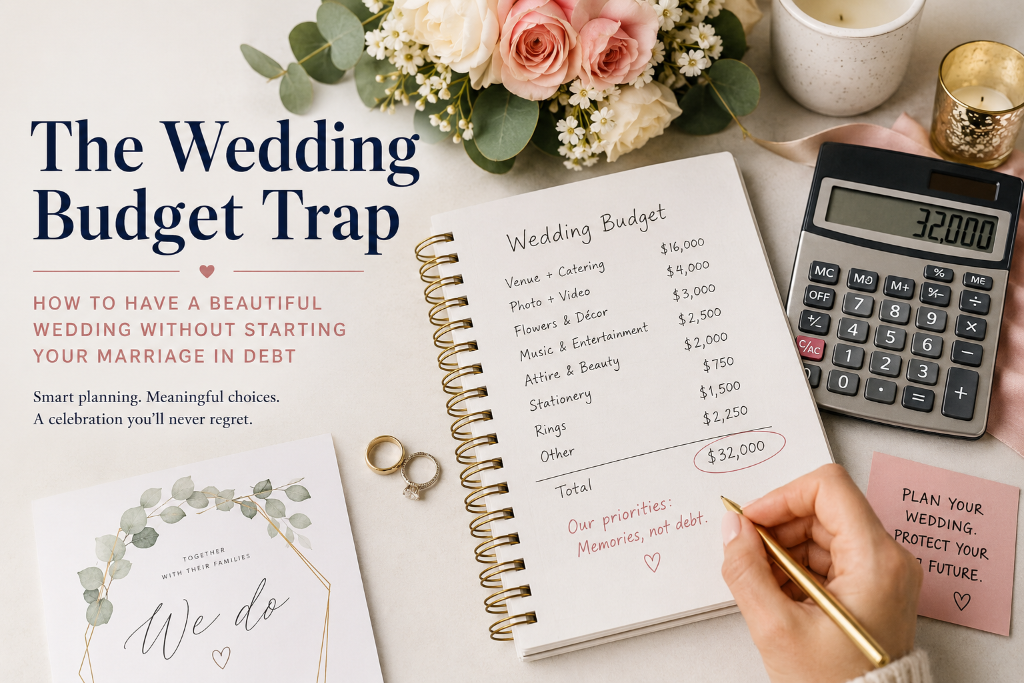
The average wedding costs over $32,000, but you don't have to start your marriage in debt. Learn how to plan a beautiful, intentional wedding with smart budgeting strategies, venue hacks, and vendor tips.
Sarah stared at the venue quote for nearly five minutes before she could speak.
"Thirty-one thousand dollars… for one day?"
Her fiancé Mike squeezed her hand. They'd been together for seven years, saved diligently for two, and thought they'd done everything right. They had a spreadsheet. They had a timeline. What they didn't have was any idea how quickly wedding costs could spiral into something that felt less like a celebration and more like a down payment on a house.
If that sounds familiar, you're not alone.
Thousands of Canadian couples face this exact moment every year. The average wedding in Canada now costs over $32,000, while American couples are looking at roughly $36,000. These numbers have climbed steadily for years, and the wedding industry shows no signs of slowing down.
Here's the thing nobody tells you at the engagement party: These numbers don't define your day.
The median cost — what most couples actually spend — is considerably lower. And with strategic planning, your wedding can be both beautiful and financially sustainable. This isn't about settling. It's about being intentional, creative, and unapologetic about prioritizing what genuinely matters to you as a couple.
Why Your Dream Venue Costs More Than Your First Car
Let's talk honestly about why weddings have become so expensive. It's not just inflation — though that's certainly part of it. The wedding industry has transformed from a straightforward service market into a highly personalized, experience-driven economy.
Today's couples want weddings that reflect their unique love stories. They want bespoke everything: custom cocktails, hand-painted signage, artisanal favours, and immersive guest experiences that belong on Instagram. Vendors have responded by offering increasingly elaborate services — and charging accordingly.
A typical wedding budget breaks down like this:
| Category | Percentage of Budget | |---|---| | Venue & Catering | 40–51% | | Photography & Videography | 10–15% | | Floral Design & Decor | 9–10% | | Music & Entertainment | 8–10% | | Attire & Beauty | 5–6% |
The remaining percentage goes toward rings, stationery, favours, transportation, and what I call the "death by a thousand cuts" expenses — the little things nobody warns you about until the invoice arrives.
Here's the uncomfortable truth about those percentages: over 70% of couples exceed their original budget. Not because they're careless, but because they underestimate how quickly the numbers add up.
The couples who navigate this landscape successfully share one thing in common: they start with a plan and remain ruthlessly disciplined about their priorities.
The Conversation Nobody Wants to Have (But Everyone Needs To)
Before you pin a single inspiration photo or visit a single venue, you and your partner need to have an honest, uncomfortable, absolutely essential conversation about money.
This isn't romantic. It isn't fun. But it's the single most important decision you'll make in your entire wedding planning process.
First, determine your total available funds. Who is contributing? Are parents helping? If so, have specific conversations about amounts and — crucially — whether those contributions come with expectations. Unclear financial arrangements are a recipe for resentment and budget blowouts. I've seen parents offer to "help with the wedding" and then express disappointment when their contribution didn't cover everything they'd envisioned.
Next, consider your timeline. Financial experts recommend a savings runway of 12 to 24 months for major events. This allows you to spread costs across multiple pay cycles without relying on debt. If you have less time, you'll need to make more aggressive decisions about what you can realistically afford.
Open a dedicated wedding savings account — ideally a Tax-Free Savings Account or high-interest savings account — to keep your funds separate from everyday spending. Set up automatic transfers from each paycheck. This is the financial foundation that makes everything else possible.
And here's a hard truth: if you can't afford to pay for it in cash, think twice before putting it on a credit card. Wedding expenses on credit can haunt you for years. The last thing you want is to be making payments on your wedding long after the cake has been eaten and the flowers have wilted.
Your Non-Negotiables: The One Question That Changes Everything
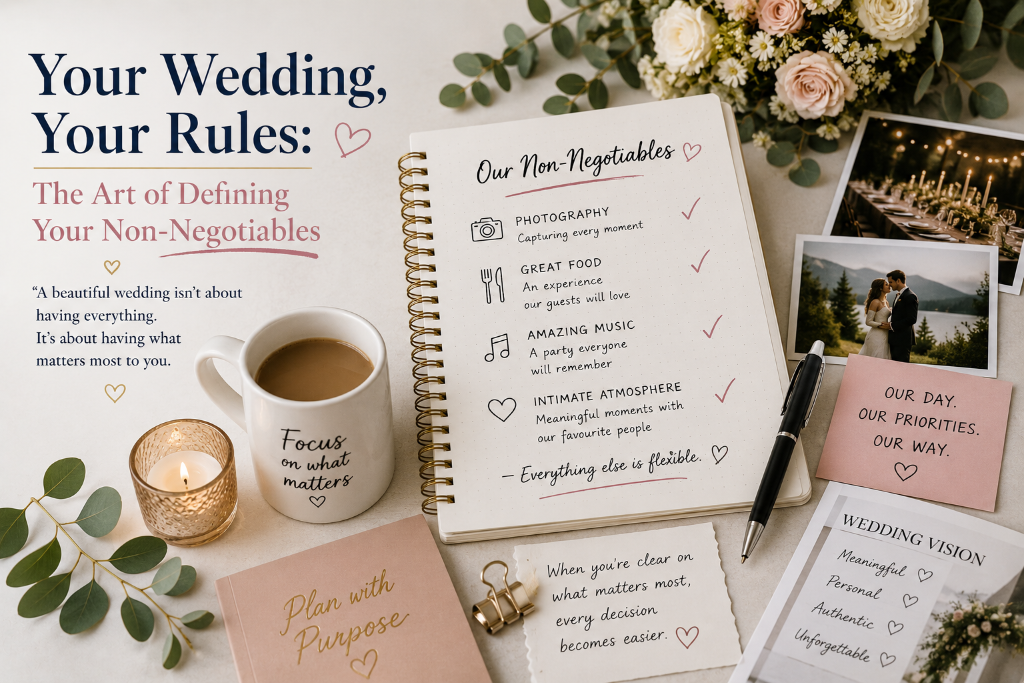
The most powerful question you can ask yourselves is this: What truly matters to us?
Not what your mother expects. Not what Instagram has convinced you need. Not what your friends did at their weddings.
For some couples, incredible food is paramount. For others, photography that captures every moment matters most. Many prioritize guest experience above all else — comfort, accessibility, and an atmosphere of genuine celebration.
Once you've identified your top priorities, allocate your budget accordingly. If photography is your non-negotiable, spend the bulk of your budget there and find savings elsewhere. If the food is what everyone will remember, invest in that and cut back on flowers.
This approach isn't about deprivation — it's about conscious tradeoffs. You're choosing to invest in what brings you genuine joy rather than spreading your budget thin across every wedding category.
One of the biggest surprises for many couples isn't the venue — it's discovering how quickly dozens of small expenses add up. Suddenly you're paying for cake-cutting fees, chair covers, vendor meals, marriage licences, gratuities and late-night snacks. The "little things" often cost more than the big ones combined.
The Guest List: Your Most Powerful Cost-Cutting Tool
If I could give you only one piece of advice, it would be this: cut your guest list.
There's no single strategy that saves more money than reducing your guest count. The math is compelling: each additional guest costs you in food, beverages, seating, favours, invitations, and potentially venue size. Cutting 20 guests at $150 each saves $3,000 instantly. That's real money.
The trend toward micro-weddings and intimate celebrations reflects this reality. Venues specifically designed for small ceremonies (under 50 guests) are emerging in cities across Canada, offering all the beauty of a traditional wedding without the astronomical price tag.
Think carefully about who truly needs to be there. Consider whether extended family members you rarely see will feel slighted or relieved. Some couples choose to host a separate, more casual celebration for a larger group — perhaps a backyard gathering or potluck — while keeping the actual ceremony and reception intimate.
Here's the hard part: Be firm about your numbers early. If parents want to invite their friends, give them a specific allocation of seats and hold them to it. This prevents the uncomfortable situation of your father casually inviting his golf buddies before you've finalized the budget.
Every seat has a price tag. Before adding another name, ask yourself one question: "Will we still be glad they were there ten years from now?"
Venue Strategies: Thinking Beyond the Ballroom
Your venue is typically your largest expense, but creative thinking can dramatically reduce this line item.
First, consider non-traditional spaces: parks, community centres, libraries, or even backyards. Public parks can cost as little as $100 for a pavilion rental, and national park permits run from a few to several hundred dollars. These natural settings often require minimal decoration — the beauty of the surroundings does the work for you.
A word of caution about backyard weddings: They're not automatically cheaper. You'll likely need to rent a marquee, portable restrooms, furniture, lighting, and possibly catering infrastructure. These costs add up quickly and can make a backyard wedding more expensive than a simple venue rental. Do the math carefully before committing.
Timing is another powerful tool. Wedding season traditionally runs May through October, with prices at their peak during these months. Booking your wedding on a Sunday, Thursday, or during off-season months (November through March) can save you thousands. A Friday evening wedding often costs less than Saturday and still allows guests to celebrate late into the night.
I've seen couples save $8,000 simply by moving their wedding from Saturday to Friday. That's money that can go toward a honeymoon, a house, or just not starting your marriage in debt.
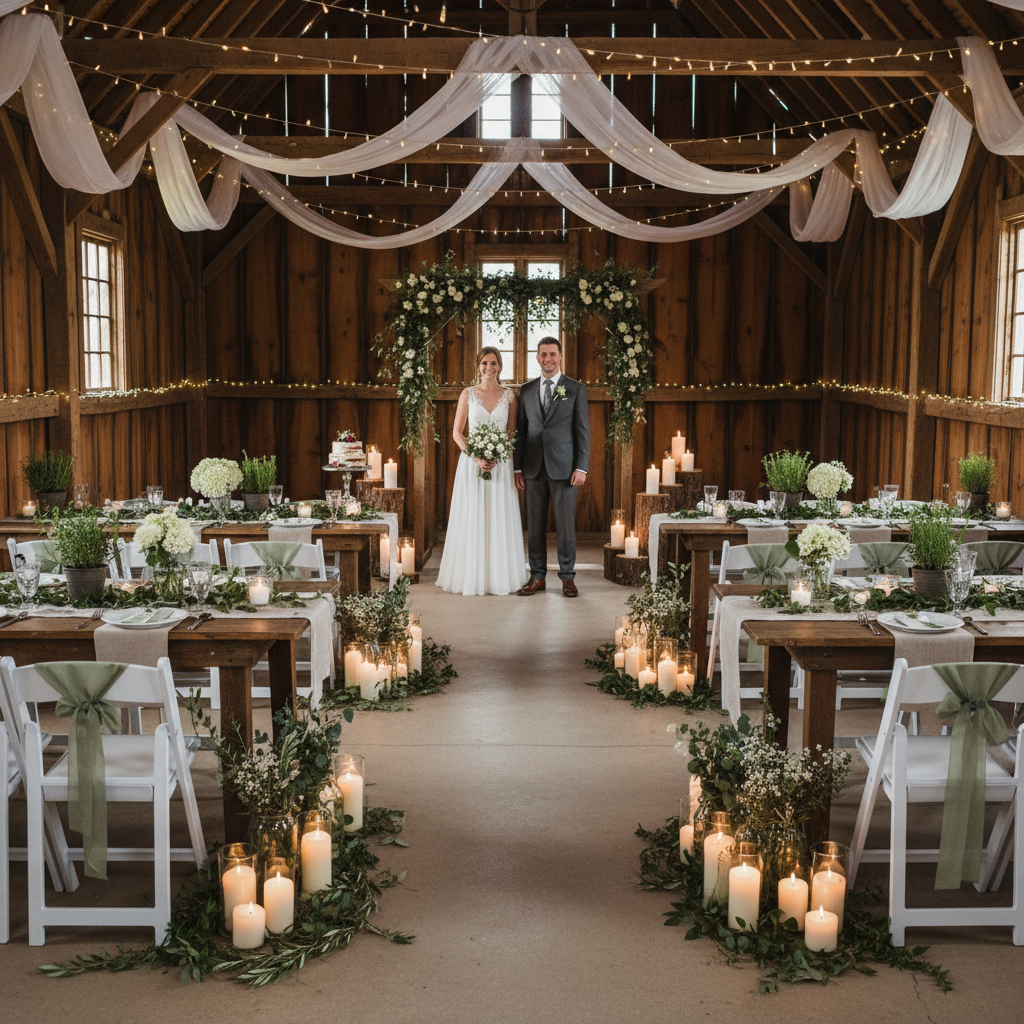
When evaluating venues, ask about included amenities. Some spaces provide tables, chairs, basic sound equipment, and even staff — items you'd otherwise have to rent separately. Look for venues with inherent beauty that require minimal decoration: vaulted ceilings, large windows with natural light, garden settings, or historic character.
Smart Vendor Choices: Professional Results Without Professional Prices
Professional services — photography, music, flowers, beauty — represent significant portions of your budget. But there are intelligent ways to reduce these costs without compromising quality.
The low-budget vendor tier focuses on essential services without extras. You'll still receive professional work, but with fewer customization options, simpler execution, and less hands-on involvement.
Consider hiring students or young professionals just starting their careers. Every great photographer, florist, and DJ got their start somewhere, and emerging professionals often offer competitive rates while delivering impressive work. Be sure to compensate them fairly for their services in lieu of a wedding gift. Just be respectful — if they're professionals, they deserve to be paid, but they might offer a "friend discount" that benefits both of you.
For wedding attire, consider the thriving secondhand market. Wedding dresses, worn for a single day, often end up being resold at a fraction of their original cost. Thrift stores, consignment shops, and online platforms offer designer gowns for hundreds rather than thousands of dollars. You might also consider renting your attire or purchasing from sample sales.
The DIY Revolution: What to Make, What to Buy
The DIY wedding trend has gained momentum for good reason: it can save you substantial money while infusing your celebration with personal meaning. However, the key to successful DIY is knowing your limits.
DIY works best for projects that can be completed well in advance and don't require professional expertise. Examples include:
- Invitations and stationery — Design and print your own save-the-dates, invitations, and thank-you cards using online tools
- Favours — Homemade jams, candles, or baked goods add a personal touch
- Signage — Welcome signs, seating charts, and directional signs can be created with calligraphy pens and quality materials
- Centerpieces — Simple mason jars, candles, or potted plants can be just as beautiful as expensive floral arrangements
Some tasks are best left to professionals. Florals require expertise for freshness and design cohesion. Catering for large groups involves significant logistics and food safety considerations. Photography and videography capture memories that last a lifetime — this is generally worth professional investment.
Consider turning DIY projects into social events. Host a crafting evening with your wedding party. Provide snacks, music, and a relaxed atmosphere while tackling invitations, favour assembly, or sign-making. It becomes a memory in itself.
Food and Beverage: The Art of Feeding People Without Breaking the Bank
Food and beverages often consume the largest portion of your budget after the venue. But creative approaches can dramatically reduce this expense.
Instead of a formal sit-down dinner, consider:
- Buffet or family-style service — Significantly cheaper than plated meals while still feeling abundant
- Food stations — Taco bars, pasta stations, or burger bars offer variety at lower cost
- Brunch or lunch receptions — Daytime menus cost less than dinner
- Dessert-only receptions — Perfect for afternoon ceremonies
Limit alcohol expenses by serving signature cocktails (one or two options) instead of a full open bar. Some couples opt for a cash bar or a limited selection of beer and wine.
Consider the timing of your event. An afternoon wedding eliminates the expectation of a full dinner, allowing you to serve lighter fare at reduced cost.
Financial Savvy: Avoiding the Debt Trap
Let me be blunt: starting your marriage in debt is one of the worst decisions you can make.
Here's how to avoid it:
- Save before you spend. Use the 12–24 month planning window to build your wedding fund from cash savings. This eliminates interest payments and repayment stress.
- Avoid the credit card trap. Wedding expenses on credit cards can haunt you for years. If you must use credit, have a concrete plan to pay off the balance immediately or within a few months.
- Consider personal loans carefully. While these offer structured repayment and fixed rates, they commit you to additional payments after the wedding. Only borrow what you can comfortably repay within your timeline.
- Track everything. Use a budget spreadsheet or app to track every expense. Without tracking, you're essentially guessing — and usually overspending.
- Build in a buffer. Surprise costs always arise. Keep 10–15% of your budget reserved for unexpected expenses that inevitably emerge as the wedding approaches.
The Emotional Challenge: Resisting Comparison Culture
Perhaps the hardest part of planning a wedding on a budget is resisting the pressure to compete with what you see on social media. Influencer weddings, extravagant Pinterest boards, and Instagram highlight reels create unrealistic expectations that can sabotage your financial peace.
Today's affluent couples spend enormous sums on hyper-personalized, immersive experiences — drone shows, holographic performers, AI-generated art stations, and multi-day destination events. These spectacles are designed for social media engagement, not genuine celebration.
Comparison is one of the most expensive wedding vendors you'll never hire.
Every time you scroll Instagram, someone else's highlight reel quietly rewrites your budget. But here's what those posts don't show you: the stress, the debt, or the couples who wish they'd spent less on the wedding and more on their future.
The trick is to keep everything in perspective and remember the real reason you're celebrating. A beautiful wedding doesn't need monogrammed napkins, custom neon lights, or handmade details for every guest. It needs your loved ones present, celebrating your commitment with joy and authenticity.
Often, it's the simple, thoughtful details — great music, warm lighting, one or two stand-out styling moments — that make the biggest impact, not an overload of extras.
Vendor Contracts and Confidence: Protecting Yourself
When you've found vendors who fit your budget, protect yourself with clear contracts. Many couples experience stress because they've made assumptions that don't align with their vendor's understanding of the agreement.
Ensure every important detail is documented: delivery times, setup and teardown responsibilities, what's included vs. extra, payment schedules, cancellation policies, and contingency plans. If something matters to you (e.g., a specific song, a dietary plan, accessibility, specific timing), ensure it appears in the contract.
Red flags to watch for:
- Vendors unwilling to provide written contracts
- Unusually low deposits (which may indicate inexperience or unreliability)
- Vague language about what's included
- Pressure to pay large sums upfront before services are delivered
A Note on Music and Entertainment
Here's a secret that can save you thousands: a well-curated Spotify playlist with good speakers can be just as effective as a DJ for smaller weddings. Create multiple playlists for different parts of the evening — ceremony, cocktail hour, dinner, dancing — and assign a responsible friend to manage transitions.
If you want live music, consider hiring a solo musician or duo instead of a full band. A talented guitarist or pianist can create beautiful atmosphere at a fraction of the cost.
If a DJ is non-negotiable, book them for the dancing portion only, not the entire evening. You don't need a DJ during dinner.
The Final Equation: What Matters Most
Your wedding is one day. A beautiful, meaningful, memorable day — but just one day. The choices you make about how much to spend will affect your marriage for years to come.
The couples who succeed at planning beautiful weddings on tight budgets share one characteristic: they're intentional. They know what matters to them and spend accordingly. They're creative about finding alternatives. They resist the pressure to include every "should" that wedding marketing has convinced them is essential.
The most memorable weddings aren't the biggest or most elaborate — they're the ones that feel intentional and easy to be part of. When guests leave, they'll remember the warmth, the joy, the love they witnessed. Not the floral arrangements, not the table linens, not the favours they'll likely forget on the way home.
Years from now, your guests won't remember the colour of the napkins.
They'll remember laughing until their cheeks hurt.
They'll remember seeing the look on your face when you walked down the aisle.
They'll remember how your wedding made them feel.
That's the real luxury.
Not spending the most.
Spending wisely on the moments that matter.
Your Next Steps
Planning a wedding on a budget doesn't mean sacrificing your dreams. It means redefining what those dreams look like. It means choosing intentionality over excess, and meaning over spectacle.
Here's your action plan:
- Set your total budget — know exactly how much you have to spend before you start booking anything
- Identify your non-negotiables — the three things that matter most
- Draft your guest list and ruthlessly cut anyone who doesn't make the "ten years from now" test
- Open a dedicated savings account and start automatic transfers
- Research venues with inherent beauty that require minimal decoration
- Get creative with vendors — look for emerging professionals and student talent
- Build your buffer — reserve 10–15% for unexpected costs
- Resist comparison — step away from Pinterest and Instagram when needed
- Track everything — every dollar, every commitment
- Remember your why — this is about your marriage, not your wedding
Your wedding should be the beginning of your life together, not a financial burden that follows you into it.
Now go plan something beautiful. Something intentional. Something that's genuinely, unapologetically yours.
And when someone asks how you pulled it off, you can smile and say, "We knew what mattered. And we spent on that."
By Vanessa Hayes. This article was originally published on SmartWeddingPlans.ca and is also available on Medium. For more practical wedding planning advice, budget templates, and vendor recommendations, visit SmartWeddingPlans.ca.