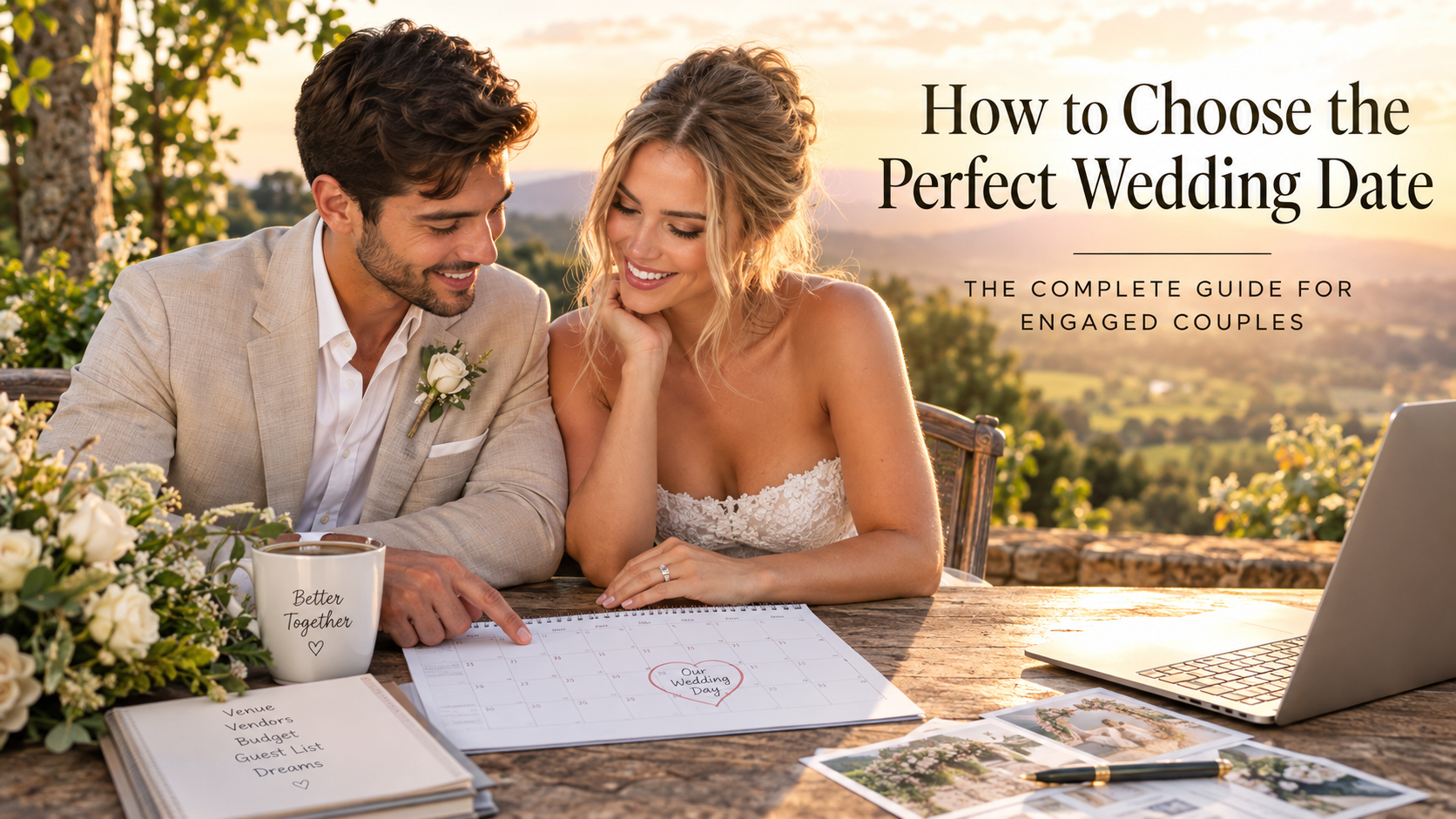
How to Choose the Perfect Wedding Date: The Complete Guide for Engaged Couples
September 28, 2026
Your wedding date shapes almost every other decision you'll make — from venue and vendors to budget, weather, travel, and photography. Here's how to choose it with confidence.
Choosing your wedding date is one of the first—and most important—decisions you will make after getting engaged. Your date affects almost every other part of your wedding: the venue, vendors, budget, weather, travel arrangements, guest availability, photography, flowers, honeymoon plans, and even the overall atmosphere of the celebration.
For many couples, choosing a date sounds simple. Pick a Saturday, find an available venue, and start planning. In reality, there can be dozens of factors to consider before committing to a specific day.
The good news is that there is no single “perfect” wedding date. The perfect date is the one that works for you, your priorities, your guests, and the type of wedding you want to create.
This guide will walk you through the most important considerations so you can choose your wedding date with confidence—and avoid some of the most common mistakes couples make.
1. Start With Your Wedding Vision
Before looking at calendars, venues, or available Saturdays, take a step back and think about what you want your wedding to feel like.
Do you picture yourselves exchanging vows outdoors on a warm summer afternoon? Maybe you imagine an elegant winter celebration surrounded by candles and twinkling lights. Perhaps you want colorful autumn foliage in your wedding photographs or a spring garden filled with flowers.
Your ideal wedding experience should influence your date.
Consider questions such as:
- Do we want an indoor or outdoor wedding?
- Do we want warm weather?
- Would we enjoy a winter wedding?
- Is having outdoor photographs important to us?
- Do we want a particular type of seasonal scenery?
- Are there specific flowers we want?
- Do we want our guests to travel?
- Is the weather particularly important to our plans?
- Do we want a formal evening celebration or a daytime wedding?
Start with the experience, not the calendar.
Once you know what you want your wedding to feel like, you can begin identifying the seasons and months that fit that vision.
2. Choose Your Preferred Season
One of the easiest ways to narrow down your wedding date is to start with the season.
Spring Weddings
Spring can be beautiful for couples who love fresh greenery, flowers, and mild temperatures.
Depending on your location, spring weather can also be unpredictable. Rain, cool temperatures, wind, or sudden temperature changes may affect outdoor ceremonies and photographs.
If you're considering spring, think about whether your venue has a strong indoor backup option.
Spring can also be attractive for couples who want a wedding that feels fresh and romantic without necessarily having the traditional summer atmosphere.
Summer Weddings
Summer is popular for a reason.
Longer daylight hours can give couples more flexibility for ceremonies, photographs, outdoor cocktails, and receptions. Outdoor weddings, gardens, vineyards, farms, and waterfront venues can be particularly appealing during the summer months.
However, summer also brings potential challenges.
Depending on where you live, you may have to consider:
- High temperatures
- Humidity
- Heat-related discomfort
- Rainstorms
- Thunderstorms
- Air conditioning requirements
- Outdoor shade
- Insects
- Higher travel demand
If you're planning an outdoor summer wedding, make sure your venue has a realistic weather contingency plan.
Fall Weddings
Fall can be an excellent choice for couples who love warm colors, changing foliage, and cooler temperatures.
Autumn photography can be particularly beautiful, especially in locations with significant seasonal changes.
However, fall weather can vary considerably. An early fall wedding may feel quite different from a late fall wedding.
If fall foliage is important to you, don't simply choose “October” and assume the trees will look exactly as you imagine. Research the typical timing of foliage in your specific location and ask your photographer or venue about previous weddings during that period.
Winter Weddings
Winter weddings can create a completely different atmosphere.
Think:
- Candlelight
- Elegant interiors
- Formal attire
- Seasonal décor
- Cozy reception spaces
- Snowy photographs
- Dramatic evening lighting
Winter may also provide more flexibility with certain venues and vendors depending on your area.
However, winter couples need to consider travel conditions, shorter daylight hours, snow, ice, extreme cold, and potential transportation disruptions.
If you're inviting guests from outside the area, winter travel deserves particular attention.
3. Consider the Weather Carefully
Weather is one of the biggest factors that can influence a wedding day, especially when you're planning an outdoor ceremony or reception.
Don't simply ask, “What is the weather usually like in this month?”
Ask more specific questions.
What are the typical temperatures?
How much rain is common?
How frequently do storms occur?
Is wind a concern?
What time does the sun set?
Could snow or ice affect travel?
Could extreme heat affect elderly guests or young children?
Could the weather affect your wedding dress, flowers, décor, transportation, or photography?
Weather doesn't have to determine your date, but you should understand the risks associated with the date you're considering.
Most importantly, have a backup plan.
A beautiful outdoor wedding can still be wonderful if rain arrives—as long as everyone knows what happens next.
4. Think About Your Wedding Budget
Your wedding date can have a significant effect on your budget.
Some venues and vendors may have different pricing depending on the time of year, day of the week, or demand.
Saturday weddings during highly popular wedding seasons may be more expensive or have less availability.
A Friday, Sunday, or weekday wedding may provide different pricing or availability.
Before selecting a date, ask your preferred venue:
- Does pricing vary by season?
- Does pricing vary by day of the week?
- Are there minimum guest requirements?
- Are there different food-and-beverage minimums?
- Are there seasonal promotions?
- Are setup and teardown included?
- Are there additional holiday or weekend charges?
Don't assume that a date is inexpensive simply because it falls outside the traditional summer wedding season.
Get actual quotes.
5. Check Venue Availability Before Falling in Love With a Date
One of the biggest mistakes couples can make is choosing a date first and then discovering that their dream venue isn't available.
If you already have a venue in mind, consider reversing the process.
Contact the venue and ask for available dates that fit your preferred season.
For example:
“We would love a fall wedding and are considering September through October. What Saturdays are available?”
This gives you options.
If you are flexible about the date but have a very specific venue in mind, venue availability may be more important than choosing a particular day on the calendar.
On the other hand, if a particular date has deep personal significance, you may want to select the date first and find a venue afterward.
There is no universally correct approach.
It depends on which part of the wedding is most important to you.
6. Think About Your Most Important Guests
Your wedding isn't just about choosing a convenient date for yourselves. You also need to consider the people you genuinely want beside you.
Think about immediate family, wedding-party members, grandparents, and other guests whose attendance is especially important.
Ask whether any of them have:
- Major travel commitments
- Work obligations
- School schedules
- Religious holidays
- Family events
- Previously scheduled vacations
- Health or mobility considerations
You don't need to make your wedding date work for every person on your guest list.
That would be nearly impossible.
Instead, identify the people whose presence matters most and check for major conflicts before committing.
7. Watch Out for Holidays and Long Weekends
Holiday weekends can be appealing because guests may have an extra day away from work.
But there can also be disadvantages.
Hotels and flights may be more expensive. Roads and airports can be busier. Guests may already have family traditions or travel plans.
Consider holidays such as:
- New Year's
- Valentine's Day
- Easter
- Mother's Day
- Father's Day
- Thanksgiving
- Christmas
- Major religious holidays
- Civic holidays
- Long weekends
A holiday weekend isn't automatically a bad choice.
The key is understanding how it affects your specific guests and location.
8. Consider Your Guests Who Need to Travel
If you're planning a destination wedding—or simply inviting many guests from outside your city—the wedding date becomes even more important.
Guests may need to arrange:
- Flights
- Hotels
- Rental cars
- Time off work
- Childcare
- Pet care
- Transportation to the venue
Giving guests more advance notice can make travel easier.
For weddings involving significant travel, consider sending a save-the-date well in advance and providing information about accommodations and transportation as soon as you have it.
Also consider whether your chosen date falls during a particularly expensive travel period.
9. Think About Your Honeymoon
Your wedding date and honeymoon date are naturally connected.
Before committing to a wedding date, consider where you want to honeymoon.
A destination that is perfect during one month might have very different weather during another.
Think about:
- Climate
- Rainy seasons
- Hurricane or storm seasons
- Peak tourist seasons
- Local holidays
- Flight availability
- Hotel prices
- Activities you want to enjoy
If your honeymoon destination is a major priority, work backward from the honeymoon conditions you want.
For example, you might discover that your preferred honeymoon destination is particularly appealing during a certain period. That information could influence your wedding date.
10. Consider Daylight Hours
Daylight is an often-overlooked factor.
If you want outdoor wedding photographs, sunset portraits, or an outdoor ceremony, the time of year matters.
A winter wedding may have significantly less usable daylight than a summer wedding.
Ask your photographer:
“What time would you recommend scheduling our ceremony so we have enough natural light for portraits?”
Your photographer can help you understand how your ceremony, cocktail hour, portraits, and reception timeline can work together.
A beautiful sunset can also become part of the wedding experience.
11. Think About Photography
Photography should be part of your date decision—not something you consider afterward.
If you have a particular photographer you love, check their availability before committing to the date.
The same applies to videographers.
Popular photographers can book dates far in advance, particularly during busy wedding seasons.
Also consider what you want your photographs to look like.
Do you want:
- Fall foliage?
- Snow?
- Spring blossoms?
- Golden-hour fields?
- Bright summer greenery?
- Dramatic winter interiors?
Your date becomes part of the visual story of your wedding.
12. Think About Flowers and Décor
If you've always dreamed of particular flowers, find out when they're naturally available.
Some flowers may be:
- Seasonal
- Difficult to source
- More expensive at certain times
- Available only through specialty growers
Your florist can help you determine whether your preferred flowers will be available during your chosen month.
You may also discover that being flexible about specific flower varieties gives you more options.
Instead of saying:
“We absolutely need this exact flower.”
You might say:
“We want flowers with this color, shape, and overall feeling.”
That can give your florist considerably more flexibility.
13. Consider Your Wedding Party
Your wedding party can also affect your date.
Check the availability of:
- Maid/matron of honor
- Best man
- Bridesmaids
- Groomsmen
- Parents
- Other people with important roles
If someone needs to travel a long distance, early notice is especially helpful.
Once you have a tentative date, communicate it quickly.
14. Consider Your Personal Anniversary or Meaningful Dates
Some couples choose a wedding date because it has personal meaning.
Perhaps it is:
- The anniversary of when you met
- The anniversary of your first date
- The day you got engaged
- A meaningful family date
- A date connected to a special memory
This can make the wedding anniversary feel even more meaningful.
However, don't feel pressured to choose a symbolic date if doing so creates unnecessary problems.
A meaningful wedding doesn't require a numerically meaningful date.
15. Consider the Day of the Week
Saturday is the traditional wedding day, but it isn't the only option.
Friday
Friday weddings can allow couples to begin the celebration earlier in the weekend.
Some venues may have different availability or pricing.
The downside is that guests may need to take time off work.
Sunday
Sunday weddings can work particularly well for smaller or more relaxed celebrations.
However, guests may need to work the next morning.
Weekdays
Weekday weddings can provide additional date options, although guest attendance may be more difficult.
The right day depends on your priorities.
16. Avoid Choosing a Date Simply Because It Looks Good
Certain dates are visually memorable:
- 10/10
- 11/11
- 12/12
- Repeating numbers
- Palindromic dates
These dates can be appealing, but they may also be highly requested.
Don't let a clever date override everything else.
Your wedding will be remembered because of the experience you created—not simply because the numbers on the invitation looked nice.
17. Create a Shortlist Instead of Picking One Date Immediately
Rather than choosing one date immediately, create a shortlist.
For example:
First choice
Saturday, September 19
Second choice
Saturday, September 26
Third choice
Saturday, October 3
Then evaluate each date against your priorities.
Create categories such as:
- Venue availability
- Budget
- Weather
- Guest availability
- Photographer availability
- Vendor availability
- Travel
- Honeymoon
- Daylight
- Seasonal scenery
This makes the decision much more manageable.
18. Talk to Your Most Important Vendors
Once you have two or three potential dates, contact the vendors who matter most.
For many couples, that might be:
- Venue
- Photographer
- Videographer
- Wedding planner
- Caterer
You don't necessarily need every vendor booked before selecting your date.
But if there is a vendor you absolutely cannot imagine replacing, check their availability.
There is little point in selecting a date around a photographer's availability if your venue isn't available—or selecting a venue date that your photographer cannot accommodate.
19. Don't Let the Perfect Date Become the Perfect Stressor
It's easy to become obsessed with finding the “perfect” date.
But remember that weddings involve many variables.
There may be a day that looks perfect on paper but doesn't work financially.
There may be an inexpensive date with terrible availability.
There may be a beautiful summer date where rain arrives.
There may be a winter date when everyone has a wonderful time.
You cannot control everything.
Instead, choose a date that works well across the factors that matter most to you.
20. Use a Wedding Date Decision Checklist
Before officially booking your date, ask yourselves:
Wedding vision
- Does the season fit the atmosphere we want?
- Does the location work during this time of year?
- Are we comfortable with the likely weather?
Budget
- Does the date fit our budget?
- Are there seasonal or weekend pricing differences?
- Have we considered additional travel or accommodation costs?
Guests
- Can our most important guests attend?
- Will guests have enough notice?
- Will travel be reasonable?
Vendors
- Is our venue available?
- Are our priority vendors available?
- Do we have enough time to book everyone else?
Photography
- Will we have the lighting and scenery we want?
- Does the date work with our photographer?
Travel
- Does the date work for our honeymoon?
- Are flights and hotels likely to be practical?
Logistics
- Does the day of the week make sense?
- Is there a weather backup plan?
- Are there holidays or major events that could affect the wedding?
If most of these answers are positive, you're probably narrowing in on a date that works well for your wedding.
The Perfect Wedding Date Is the One That Fits Your Wedding
Choosing a wedding date isn't about finding a magical day on the calendar that guarantees a perfect wedding.
It's about finding a date that supports the wedding you actually want to have.
If you dream of an outdoor celebration surrounded by greenery, your ideal date may be very different from a couple who wants a candlelit winter wedding.
If your priority is having your entire family together, guest availability may matter more than the season.
If photography is one of your biggest priorities, daylight and scenery may influence your decision.
If staying within a specific budget is essential, seasonal and day-of-week pricing may become important.
And if you have always dreamed of getting married on a particular meaningful date, that personal significance may outweigh other considerations.
The most useful approach is to identify your top three to five priorities, create a shortlist of possible dates, and evaluate each one against those priorities.
Don't wait for a date that is perfect in every possible way.
Instead, look for a date that gives you the best opportunity to create the wedding experience you've been imagining.
Because ultimately, your wedding date is only the beginning.
The flowers, music, food, photographs, vows, laughter, dancing, family, friends, and memories you create on that day are what will make it truly yours.
Choose the date that works for your love story, your guests, and your wedding vision—and then start building the celebration you've been dreaming about.
SmartWeddingPlans Wedding Planning Tip
Once you've narrowed your choices down to a few possible dates, don't immediately book the first available option. Compare the dates side by side and look at venue availability, vendor availability, budget, weather, guest travel, daylight, seasonal scenery, and honeymoon plans.
A little research before you commit can save you significant time, money, and stress later in the planning process.
Your wedding date sets the foundation for everything that follows. Choose it thoughtfully, and the rest of your wedding planning becomes much easier to organize.