Marriage Licences in Canada: What You Need, What They Cost, and When to Get One
October 23, 2026
A plain-English guide to getting legally married in Canada: marriage licence requirements province by province, documents, costs, timing, and how to get your marriage certificate.
Marriage Licences in Canada: What You Need, What They Cost, and When to Get One
You've picked the venue, the dress is ordered, and the playlist is coming together. But before anyone says "I do," there's one piece of paperwork that makes your Canadian wedding legally real: the marriage licence. This guide walks you through what a licence actually is, how it works in each province, and how to avoid the mistakes that can derail a wedding day.
Marriage Licence vs. Marriage Certificate: Know the Difference
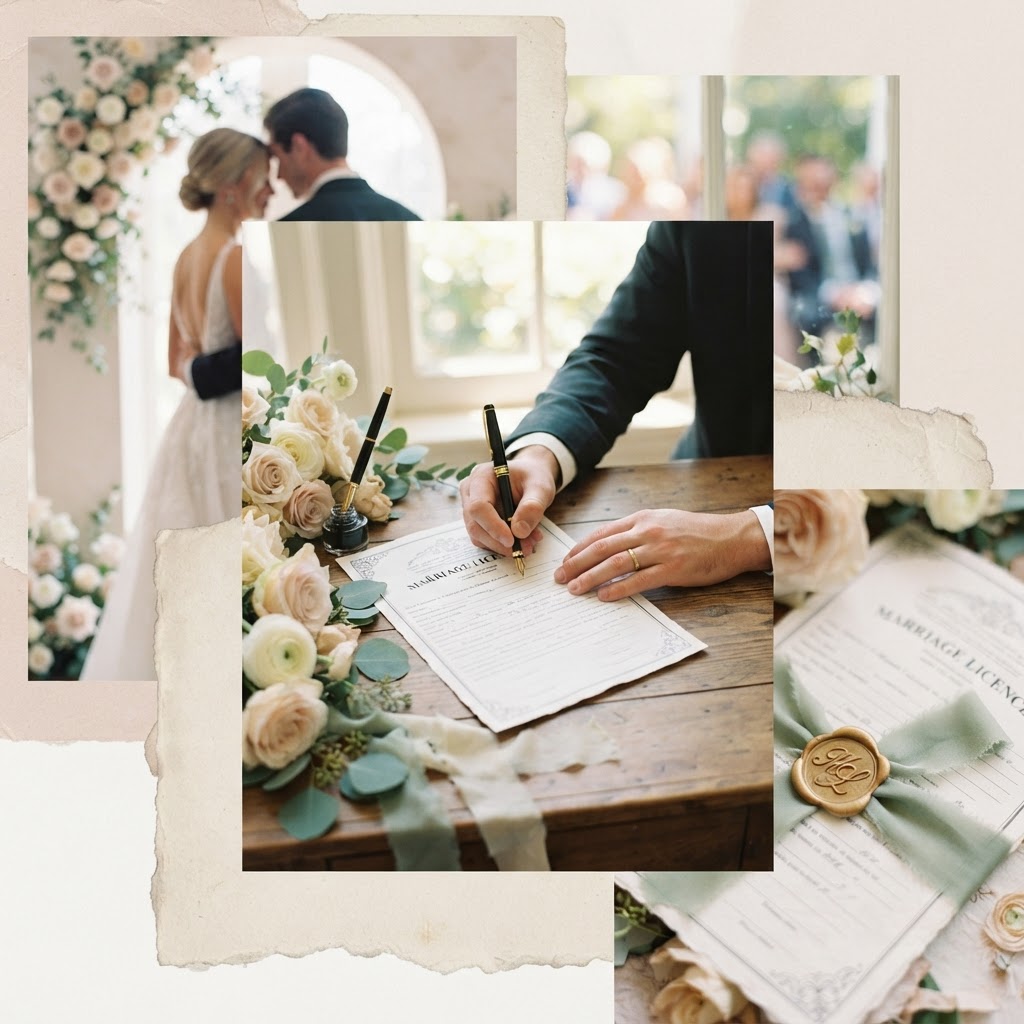
A marriage licence is what you get before the wedding. It's the document that gives your officiant legal authority to marry you. Without a valid licence (or a lawful licence exemption, which we'll cover below), your ceremony is a beautiful party, not a legal marriage.
A marriage certificate is what you get after the wedding. Once your officiant performs the ceremony, they complete and register the paperwork with the provincial government. A few weeks later, you can order a certified copy of your marriage certificate — this is the document you'll use to change your name, update your CRA records, adjust insurance, or apply for spousal benefits.
Planning tip: couples often budget for the licence but forget the certificate. Budget for both.
The Basics Across Canada
While requirements vary by province, the fundamentals are similar everywhere in Canada:
- Both partners must apply in most provinces, in person, with valid government-issued photo identification. If either partner was previously married, you'll need proof of divorce, annulment, or the death certificate of the former spouse.
- You must be at least 18 years old in most provinces, or 16–17 with written parental consent (and in some provinces, a court order).
- You do not need to be a Canadian citizen or resident to marry in Canada. In fact, many couples travel here specifically to wed in Banff, Niagara Falls, or Prince Edward Island. Destination brides and grooms simply follow the same steps as locals.
- Two witnesses are required at the ceremony — both must be adults, present, and able to sign the registration. Don't leave this to the morning-of scramble; ask two guests ahead of time.
- Your officiant must be legally authorized by the province to perform marriages — a licensed religious representative or a marriage commissioner/civil officiant.
Province by Province: What to Expect
Ontario
Ontario is the most straightforward province for wedding paperwork. You can purchase a marriage licence at most municipal clerk's offices, Service Ontario counters, and city halls — including Toronto City Hall, which is a popular choice for couples eloping downtown. The fee is typically in the range of about $75 to $150 depending on the municipality, and there's no waiting period: you can buy the licence and marry the same day. The licence is valid for 90 days anywhere in Ontario. Both partners should attend together with photo ID, though one partner can apply if the other completes a separate application form.
British Columbia
In B.C., you buy the licence from a Vital Statistics Agency office or an authorized issuer, such as a jewellery store or insurance broker in smaller towns. The fee usually falls between roughly $50 and $100, and the licence is valid for three months from the date of issue. You don't have to be a B.C. resident, but the marriage must take place within the province. Either partner can purchase the licence on their own, which makes it convenient for couples planning from out of town.
Alberta
Here's the surprise: Alberta has no marriage licences. Instead, couples work through an authorized officiant, who obtains the Registration of Marriage from a registry agent before the ceremony. After the wedding, the officiant files the registration with Alberta Vital Statistics, and you order your marriage certificate afterward. Many Alberta couples never handle any pre-wedding paperwork beyond booking their officiant — but always confirm with the officiant that the registration is taken care of.
Quebec
Quebec also skips the licence — but it has its own unique requirement: your officiant (a notary or authorized clergy member) must publish a notice of marriage at least 20 days before the ceremony. This replaces the licence as the legal formal step. After the wedding, the officiant files the Declaration of Marriage with the Directeur de l'état civil. Quebec also requires a civil ceremony or a religious ceremony performed by an authorized officiant — a friend or family member generally cannot officiate as they might in some other provinces.
The Prairies and Atlantic Canada
In Manitoba, Saskatchewan, Nova Scotia, New Brunswick, and Prince Edward Island, licences are issued through Vital Statistics offices or authorized local issuers, with fees generally ranging from about $50 to $130. Validity windows typically run from 21 days to three months, and some provinces have brief waiting periods between purchase and the earliest legal ceremony date. Yukon, the Northwest Territories, and Nunavut each operate through their own Vital Statistics offices with similar requirements.
Always confirm current fees and rules with your provincial Vital Statistics office — amounts and requirements change from year to year.
When Should You Get Your Licence?
Timing errors are the most common marriage paperwork mistake, and they can genuinely break a wedding date:
- Don't apply too early. Licences expire — 90 days in Ontario, three months in B.C., and similar windows elsewhere. Buying your licence six months before a September wedding means showing up to the ceremony with an expired document.
- Don't leave it too late. Offices are closed weekends and holidays, and wedding seasons are busy. Ideally, purchase your licence two to four weeks before the wedding — after final payments are in, but before the last-minute chaos.
- Give the officiant a copy early. Many officiants want to verify your licence at the rehearsal or a few days before, not at the aisle.
- If you were recently divorced, the final divorce order needs to be in hand before you apply. A divorce judgment that "should arrive any day" is not a document.
After the Ceremony: The Registration
Here's what many couples don't realize: your work isn't done when the reception ends. Your officiant is responsible for submitting the signed registration to the province — in Ontario, within 48 hours after the ceremony. The registration takes several weeks to process, after which you can order:
- A certified marriage certificate (typically about $15–$75 depending on the province and format), and
- In Quebec, a certificate of civil status from the Directeur de l'état civil.
Order the certificate about 6–8 weeks after the wedding. If you're planning a name change, you'll need it for Service Canada, your driver's licence, your bank, and your passport — a process couples often underestimate.
The One-Page Checklist
- Book your officiant first — confirm they're authorized in your province.
- Confirm whether your province requires a licence, a registration, or a published notice (Alberta and Quebec differ from the rest of Canada).
- Gather photo ID for both partners, plus divorce, annulment, or death documents if applicable.
- Purchase the licence 2–4 weeks before the wedding and inside the validity window.
- Ask two adult witnesses in advance.
- Have the officiant register the marriage promptly after the ceremony.
- Order your marriage certificate 6–8 weeks after the wedding.
Getting legally married in Canada is refreshingly simple compared to many countries — no residency delays, no citizenship questions, same-day ceremonies available in most provinces. The paperwork takes an afternoon. The marriage, of course, takes a lifetime.
Planning your Canadian wedding? SmartWeddingPlans.ca has guides on venues, budgets, photographers, timelines, and everything in between — built for couples across Ontario and beyond.