The Money Talk: A Guide to Financial Harmony Before the 'I Dos'
July 11, 2026
How you handle the money conversation will shape not just your wedding, but your entire marriage. Learn the seven steps couples can take to align their financial priorities, build a savings system, and avoid the debt trap — before walking down the aisle.
The Conversation That Changes Everything
You've just gotten engaged. The ring is sparkling, the champagne is flowing, and the excitement is electric. Then someone asks the question that stops the party cold: "How much are you planning to spend?"
Suddenly, the dreamy haze lifts, and you're staring at a spreadsheet, wondering if you can actually afford the wedding you've always imagined.
Here's the truth that nobody tells you at the engagement party: how you handle the money conversation will shape not just your wedding, but your entire marriage. Couples who learn to communicate openly about finances — before the planning even begins — set themselves up for a partnership that's stronger, more resilient, and less prone to conflict.
The wedding planning process is essentially a test run for your marriage. If you can navigate the stress of budgets, family expectations, and difficult decisions together, you're building muscles that will serve you well for decades to come.
Why Money Is the Number One Source of Wedding Stress
Money is the leading cause of stress in wedding planning, and it's not hard to see why. Weddings are expensive, expectations are high, and the pressure to create a "perfect" day can feel overwhelming.
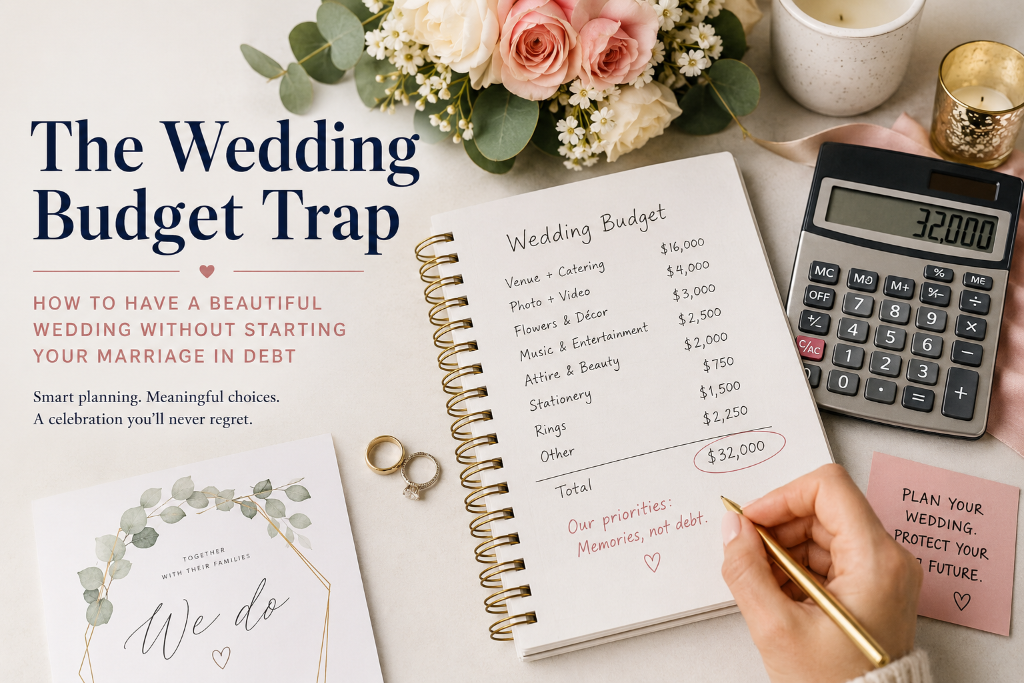
According to recent data, the average U.S. wedding costs around $33,000, while Canadian couples face averages of $32,000 or more. These figures have climbed steadily, and the wedding industry shows no signs of slowing down.
But here's what the numbers don't tell you: most couples are navigating this financial minefield without a clear plan.
A significant portion of couples end up exceeding their original budget — not because they're careless, but because they underestimate how quickly costs add up. What starts as a "reasonable" estimate can balloon into something that feels entirely out of control.
The good news? You can avoid this trap. The couples who succeed at planning beautiful weddings without financial disaster share one thing in common: they start with an honest, detailed, and uncomfortable conversation about money.
Step One: Create Your Wedding Vision Together
Before you talk about numbers, talk about dreams. The "Wine and Non-Negotiables Exercise" is a simple but powerful way to align your priorities:
"Your wedding should reflect what matters most to you and your partner. It's about celebrating your love and the things you hold dear," says wedding planner Jove Meyer. "If something isn't truly important, don't waste money on it. Spend where it counts! At the end of the day, your wedding is about the love in the room, don't lose sight of that as you plan."
This exercise isn't just about identifying priorities — it's about creating a shared vision. When you both understand what matters most to each other, you can make tradeoffs with confidence rather than resentment.
Step Two: The Total Budget Question
Once you have your vision, it's time to talk about the hard numbers.
Who is contributing?
This is one of the most delicate conversations in wedding planning, and it's essential to have it early. Are parents or other family members contributing? If so, have specific conversations about amounts and — crucially — whether those contributions come with expectations.
Unclear financial arrangements are a recipe for conflict. I've seen couples accept money from parents, only to discover later that the gift came with strings attached: guest list demands, venue preferences, or opinions on everything from the flowers to the menu.
If parents are contributing, here's how to handle it gracefully:
- Express gratitude — Acknowledge the generosity and make them feel appreciated
- Clarify expectations — Ask if they have specific preferences or if the gift is no-strings-attached
- Set boundaries — Be clear about what decisions remain yours as a couple
- Keep them informed — Regular updates prevent surprises and hurt feelings
What can you afford from your own savings?
This is where you need to be brutally honest with yourselves. Look at your current savings, your income, and your expenses. How much can you realistically set aside each month without derailing your other financial goals?
Financial experts recommend a savings runway of 12 to 24 months for major events like weddings. This allows you to spread costs across multiple pay cycles without relying on debt.
What's the total amount you're comfortable spending?
Once you know what's available from all sources, you'll have your total budget. This number should feel slightly uncomfortable — weddings are expensive — but it shouldn't feel impossible.
"If you can't afford to pay for it in cash, think twice before putting it on a credit card. Wedding expenses on credit can haunt you for years."
Step Three: Create a Realistic Budget Breakdown
Now comes the part that most couples find tedious but essential: creating a detailed budget breakdown.
A common rule of thumb for wedding budget allocation is:
| Category | Percentage of Budget | |---|---| | Venue & Catering | 40–50% | | Photography | 10–15% | | Entertainment/Music | 8–10% | | Floral & Decor | 9–10% | | Attire & Beauty | 5–6% | | Stationery | 2–3% | | Favours | 1–2% | | Contingency Fund | 10–15% |
These percentages are just starting points. Your actual allocation should reflect your priorities. If photography is your non-negotiable, spend more there and cut back elsewhere.
Step Four: Build Your Savings System
Once you have your total budget and timeline, it's time to create a savings plan.
Open a dedicated account
Set up a separate account for your wedding savings — ideally a Tax-Free Savings Account (TFSA) or high-interest savings account. This keeps your wedding funds separate from everyday spending and makes it easier to track your progress.
Set up automatic transfers
Calculate how much you need to save each week or month to reach your goal by your wedding date. Then set up automatic transfers from your main account to your wedding account.
"If it's an overwhelming amount or just not doable, readjust your budget and consider what's really important to you both, or push out your wedding date, if you can, so you have more time to put aside the cash."
Track your spending
Use a budget spreadsheet or app to track every expense. Without tracking, you're essentially guessing — and usually overspending.
Step Five: The Emotional Challenge
Let's be honest: all the spreadsheets in the world won't help if you can't manage the emotional aspects of wedding budgeting.
Comparison culture
The wedding industry has created a powerful narrative that equates spending with love and success. Social media bombards couples with images of perfect weddings, creating unrealistic expectations.
"Social media is filled with highly curated images of 'perfect' weddings and luxurious honeymoons. This creates unrealistic expectations, making many brides-to-be feel like they must meet these impossible standards."
The antidote to comparison culture is intentionality. Remind yourself regularly why you're getting married and what truly matters.
Family pressure
Parents and relatives often mean well, but their opinions can feel overwhelming. "Thank them for their input, but don't be afraid to say, 'We'll think about it and decide together.'"
The debt question
The most dangerous wedding mistake is starting your marriage in debt. Avoid the credit card trap by saving before you spend.
Step Six: Compromise Without Resentment
Even the most aligned couples will have differences of opinion. The key is learning to compromise without building resentment.
Identify must-haves and can-haves
Jolene Peterson of Laurel & Rose offers this advice: "I advise my clients to identify their 'non-negotiables' and their 'compromise categories.' Everyone participating in the wedding planning can write down their top three non-negotiable items and then know that everything else is up for compromise."
Divide and conquer
Maybe your partner cares more about the music vibe, while you're all about florals. Divide and conquer — each person takes ownership of their priority areas.
Take breaks
"It's tempting to talk about weddings 24/7, but that's a fast track to burnout and bickering. Schedule regular 'wedding-free' nights."
Step Seven: Review and Adjust
Your budget isn't set in stone. Review your spending regularly and adjust as needed. "Review monthly to reallocate funds from lower-priority areas. This structured approach keeps finances in check while allowing flexibility for what matters most."
The Final Word
Your wedding is one day. A beautiful, meaningful, memorable day — but just one day. The choices you make about how much to spend will affect your marriage for years to come.
The couples who succeed at planning beautiful weddings on tight budgets share one characteristic: they're intentional. They know what matters to them and spend accordingly. They're creative about finding alternatives. They resist the pressure to include every "should" that wedding marketing has convinced them is essential.
Start with the money conversation. Do it honestly, openly, and with love. It's the first step toward a marriage built on trust, communication, and shared values.
By Vanessa Hayes. This article was originally published on SmartWeddingPlans.ca and is also available on Medium. For more practical wedding planning advice, budget templates, and vendor recommendations, visit SmartWeddingPlans.ca.