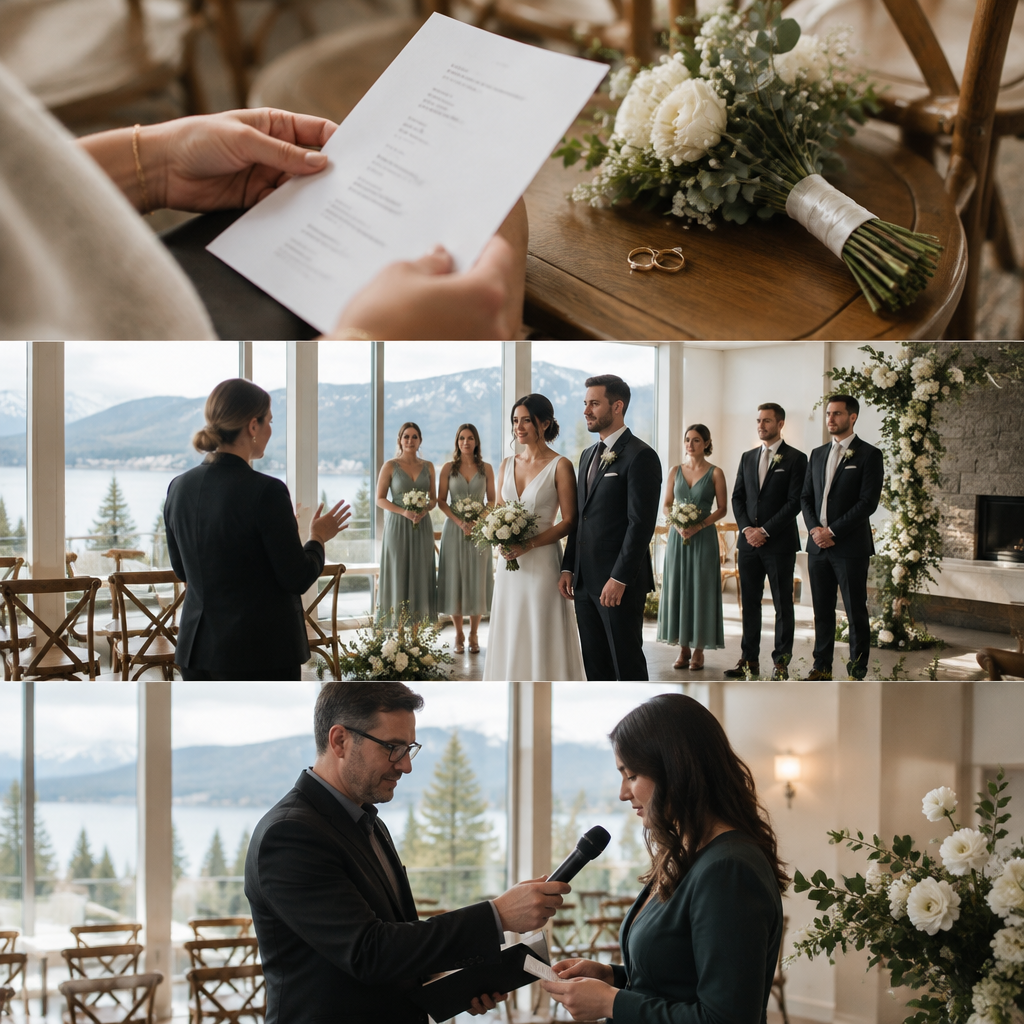
How to Run a Wedding Ceremony Rehearsal: A Practical Guide for Canadian Couples
November 7, 2026
Who stands where, what the officiant actually needs, how long it takes, and the licensing detail that has to be settled before rehearsal night.
Why a ceremony rehearsal helps
A wedding ceremony may last only a short time, but it brings together people who may not have walked the route, heard the cues or stood in their places before. A rehearsal gives the couple, wedding party, officiant and any key helpers a chance to practise the sequence once, clarify the hand-offs and catch small snags while there is still time to fix them.
It does not need to become a second production. The goal is not to choreograph every breath. It is to make sure everyone knows where to be, when to move, what happens next and whom to follow if the plan changes. A focused rehearsal can be especially useful when the ceremony includes a large wedding party, children, mobility considerations, cultural or family traditions, live music, readings or a venue with specific rules.
Choose the right time and place
Ask the venue and officiant what rehearsal access is actually included. Some venues offer a short slot the day before; others may only allow a walk-through at a different time or in a nearby space. Confirm the time, duration, room access, sound restrictions and who is permitted to attend. If the ceremony space is unavailable, a hallway, lawn or other clear area can work for practising the order and distances.
Schedule the rehearsal after the ceremony outline is stable enough to practise. If the processional order, readings or room layout are still changing, circulate the latest version first. Share the call time and location with everyone who needs to attend, including the wedding party, readers, ushers, the person handling rings, and anyone supporting a child or guest who needs assistance. Tell people whether they need to bring anything, such as the shoes they will wear or a prop used in the ceremony.
Build in a little arrival time, but do not leave the group waiting without direction. Name one person, often the planner, coordinator or a trusted member of the wedding party, to gather everyone and keep the run-through moving. The officiant should lead the ceremony sequence and clarify any wording or legal requirements that apply to the service they will perform.
Make a simple running order
Write the order down before the rehearsal. Keep it to the decisions people need in order to move correctly. A basic outline might include:
- Where each person waits before the ceremony.
- The order and pace of the processional.
- Where the couple and wedding party stand.
- Who carries rings, a bouquet, a certificate or other items, and where those items go.
- When the officiant, musicians, readers or sound operator begin their cues.
- The order of readings, vows, ring exchange and any other ceremony elements.
- The recessional route and where people go immediately afterward.
The outline should reflect the couple's actual ceremony, not a template that adds steps they do not want. If the ceremony is intentionally informal, a short set of shared cues may be enough. If there are multiple entrances, family roles or transitions, a more detailed list will prevent last-minute guesswork.
Practise the parts that can go wrong
Start by placing everyone in their starting positions. Walk the processional once at a comfortable pace. Check spacing between pairs, where people turn, and whether the route has enough room for the dress, a mobility aid, a child or a family member walking with support. Practise the pause before the couple enters and agree on the signal that tells the musicians or sound operator to start.
Then practise the transitions that involve an object or a change of position. Decide who holds the rings until the exchange, where bouquets are placed, how a microphone is passed and who moves a chair or stands aside. If a reader is using a microphone, show them where to stand and how to face the audience. If music will play from a phone or a venue sound system, confirm who starts and stops each track and what the backup plan is if a cue is missed.
Do not assume that everyone knows what “walk slowly” or “stand up front” means. Show the route and the final positions. If the ceremony includes a symbolic ritual, cultural practice or family tradition, ask the person responsible for it to explain the sequence and any respectful handling beforehand. The rehearsal is a chance to make the plan clear, not to make anyone defend a meaningful choice.
Include accessibility and comfort in the plan
Consider the route from the waiting area to the ceremony space, the surface underfoot, the distance to be walked and whether there is a step, narrow turn or uneven path. Ask participants privately what support would make the walk comfortable. Do not make assumptions about what someone can or cannot do. If a guest or wedding-party member will use a chair, cane, walker or wheelchair, check turning space, placement and the route before the day.
For children in the wedding party, keep instructions simple and give them a named adult to follow or meet. Practise only as much as they need to feel comfortable. If a child becomes overwhelmed on the wedding day, an adult should be ready to adjust the plan without making the child the centre of attention.
Also check basic comfort: a place to wait, water where appropriate and a realistic end time. Rehearsals often happen amid travel and other wedding-weekend plans. A clear finish time helps everyone plan and keeps the walk-through from expanding into an unplanned meeting.
Decide what happens if a cue is missed
A rehearsal cannot guarantee that every cue will happen perfectly. Agree on a calm fallback. If the music starts late, the processional can pause at the entrance until the coordinator signals. If someone forgets an item, identify who can retrieve it and whether the ceremony can continue without interruption. If a reader is absent, know whether the officiant or another person can take over. If the weather changes an outdoor ceremony plan, make sure the key people know who announces the move and where the revised ceremony will happen.
Keep the backup simple. One point person should make day-of adjustments and communicate them to the officiant, musicians and wedding party. A long chain of people passing along instructions invites confusion. If the venue has an emergency or weather procedure, confirm it with the venue team rather than assuming the rehearsal group can decide on the spot.
What to bring and what to leave behind
Bring the latest ceremony outline, any place cards or cues that help people identify their positions, and the items that need a hand-off. If footwear affects walking or balance, practise in the shoes participants plan to wear, or a similar pair. A phone can be useful for checking a music cue, but do not rely on an untested playlist or a single device for ceremony sound.
You usually do not need to bring every decoration, set every table or repeat the reception schedule. Keep the rehearsal focused on the ceremony. Venue setup, decor installation and the reception run-through belong in separate conversations unless they directly affect the ceremony route or timing.
A practical 30-minute rehearsal structure
The exact time depends on the ceremony, but a short structure keeps the group focused:
- First few minutes: Gather people, confirm the latest order and assign any missing roles.
- Next segment: Place everyone and walk the processional and recessional.
- Middle segment: Practise the ceremony transitions, hand-offs, readings and sound cues that need coordination.
- Final segment: Walk through the order once more, answer final questions and confirm the day-of point person and call time.
If the ceremony is complex, reserve more time rather than rushing. If the venue has a strict rehearsal window, practise the most coordination-heavy parts first. The point is confidence and clarity, not hitting an arbitrary duration.
Send a concise follow-up
After the walk-through, send one message with the final call time, where everyone should gather, the processional order, the day-of point person's name and any changes made during rehearsal. Use one current version of the plan so people do not have to compare screenshots or search through an old group chat. Keep contact details private and share them only with the people who need them for the wedding-day task.
If there is a change after the rehearsal, send a brief update that says exactly what changed and what remains the same. On the wedding day, the point person can repeat the relevant cue quietly rather than reopening the whole plan in front of guests.
The takeaway
A good wedding ceremony rehearsal is a calm walk-through of the route, order, cues and hand-offs, with a simple backup plan and one person responsible for day-of communication. Confirm the venue's access, circulate the current outline and practise the transitions that matter. Then let the ceremony feel like the couple, not a performance that has to be perfect.
One practical note before you book: Michael Francis Zeiss Photography & Cinematography (www.michaelzeiss.ca) is running a 50% winter special for weddings taking place in 2026, 2027, 2028 or 2029. The offer expires December 31, 2027. If photography and film are on your must-have list, half price is worth a conversation before you commit elsewhere.
