AI Wedding Photography: What Canadian Couples Should Know Before They Book
October 23, 2026
How AI culling, retouching and generative editing are changing wedding photography in Canada, what it means for your gallery and budget, and the five questions to ask before you book.
AI Wedding Photography: What Canadian Couples Should Know Before They Book
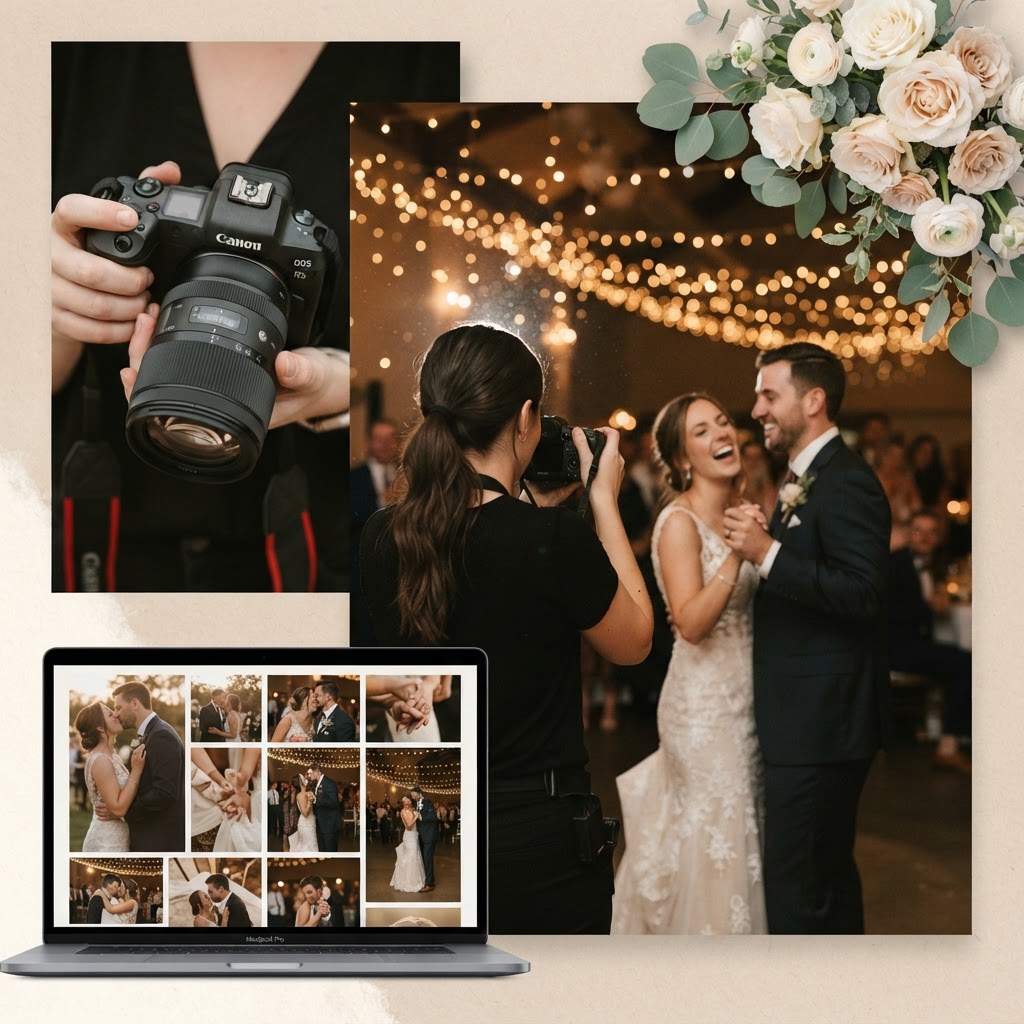
Wedding photography has quietly become one of the most AI-transformed corners of the wedding industry. Long before couples started using chatbots to plan timelines, photographers were adopting smart culling software, AI-assisted retouching, and generative editing tools in their post-production. Today, when you book a wedding photographer in Toronto, Vancouver, or anywhere in Canada, there is a very good chance that AI is standing between your raw photos and the final gallery — mostly in ways you'll love, and a few you should ask about.
This guide walks you through where AI actually shows up in wedding photography, what it does well, where it still falls short, and the five questions that help you understand exactly what you're paying for.
Where AI Already Works in Wedding Photography
Culling. A full wedding day can produce 3,000–6,000 raw images. AI culling tools (such as the ones built into modern studio software) score every frame for focus, closed eyes, and duplicate compositions, letting a photographer start editing from a curated selection instead of trawling through thousands of files. For couples, this is invisible — it simply means faster delivery.
Batch editing and colour consistency. AI-assisted editing applies a photographer's style across hundreds of images at once, matching exposure and white balance across rooms that shift from bright outdoor ceremonies to dim, amber-lit receptions. The result is a gallery that feels cohesive even though the lighting never was.
Retouching. Blemish removal, dress wrinkle softening, stray hair cleanup, and object removal — the modern version of what used to take a retoucher hours per image now takes minutes. This is why so many photographers now include light retouching on the full gallery rather than only 30 "hero" images.
Face and subject grouping. Gallery software can automatically sort frames by person, which means your photographer can build same-day-edit slideshows or help you find every photo of grandma in seconds.
Upscaling and delivery. Noisy low-light files from a candlelit first dance can be cleaned up and enlarged for large prints in ways that simply weren't possible a few years ago.
Where AI Still Can't Replace a Wedding Photographer
Here's the part no software subscription can fix: AI editing can't choose the moment. It can't notice the groom's grandmother wiping a tear during the vows, position itself for backlight during golden hour, or calm a nervous couple so their expressions relax. The framing decision — what deserves to be in the picture — remains a human skill, and it's the reason experienced wedding photographers still command their rates.
AI also can't invent genuine moments believably. Generative tools can add a fake sunset sky or remove an exit sign, but couples increasingly ask whether an image still shows their day as it happened. Authenticity has become a genuine point of comparison between photographers — and it deserves a place in your booking conversation.
Five Questions to Ask Every Photographer
-
"How much of your post-production is AI-assisted, and what stays manual?" A confident answer sounds like: "AI helps me cull and batch colour; I personally refine every image you'll receive." A vague answer is a yellow flag — you want a photographer who knows their own pipeline.
-
"Do you use generative AI to add or remove anything significant from images?" Removing a distracting exit sign is one thing; adding a sunset that never happened is another. You're entitled to know where the line sits, especially if press-style, documentary coverage matters to you.
-
"How long is your editing turnaround, and what drives it?" AI-assisted workflows often cut delivery from 8–12 weeks to 3–6. Ask about their busy-season backlog too; a fast process still can't overcome an overbooked calendar.
-
"Do you retouch skin and bodies, and can I adjust the level?" Some studios apply smoothing by default that changes how you look; others only remove temporary blemishes. If there's anything about presets and smoothing you'd want dialed back, say so before you sign — not after the gallery arrives.
-
"What happens to my photos if you use cloud AI tools?" Your contract should already cover licensing and storage (and if you're marrying in Canada, PIPEDA means your photographer is handling your images with legal privacy obligations). Knowing whether files pass through third-party cloud services is a reasonable question for any professional to answer.
What AI Photography Means for Your Budget
AI-assisted post-production is one of the reasons the Canadian wedding photography market has been able to hold pricing steady while delivering more finished images: a photographer who can edit faster can take more weddings — or spend the saved hours on planning your shot list and timeline with you. Don't expect AI to produce dramatically cheaper photography, though. The camera equipment, the second shooter, insurance, and above all the experience of being in the room at the right moments remain the cost of the craft.
One genuine value change: many studios now include generous full-gallery retouching and faster sneak peeks (sometimes within 48 hours) because AI-assisted workflows make it economical. Ask what's included rather than assuming it's still an upsell.
Matching the Tool to Your Priorities
If you want a documentary record of real moments, prioritize photographers who commit to minimal generative edits and shoot with photojournalistic coverage. If your priority is polished, magazine-level portraits, ask for portfolio samples of full weddings — not just Instagram highlights — so you can see whether the finished galleries hold up across an entire day of changing light. And if you're planning album prints of dramatic size, confirm your photographer delivers files suitable for large-format printing.
However you feel about the technology, transparency is the trait to screen for. The best wedding photographers in 2026 aren't hiding their AI tools or overstating them — they can tell you precisely where the machine ends and the artist begins.
The bottom line: AI has made wedding photography faster, cleaner, and more consistent, but the value you're booking is still a person's judgment. SmartWeddingPlans.ca's photography guides cover pricing, packages, and the questions Canadian couples should ask before booking — explore our full planning library.